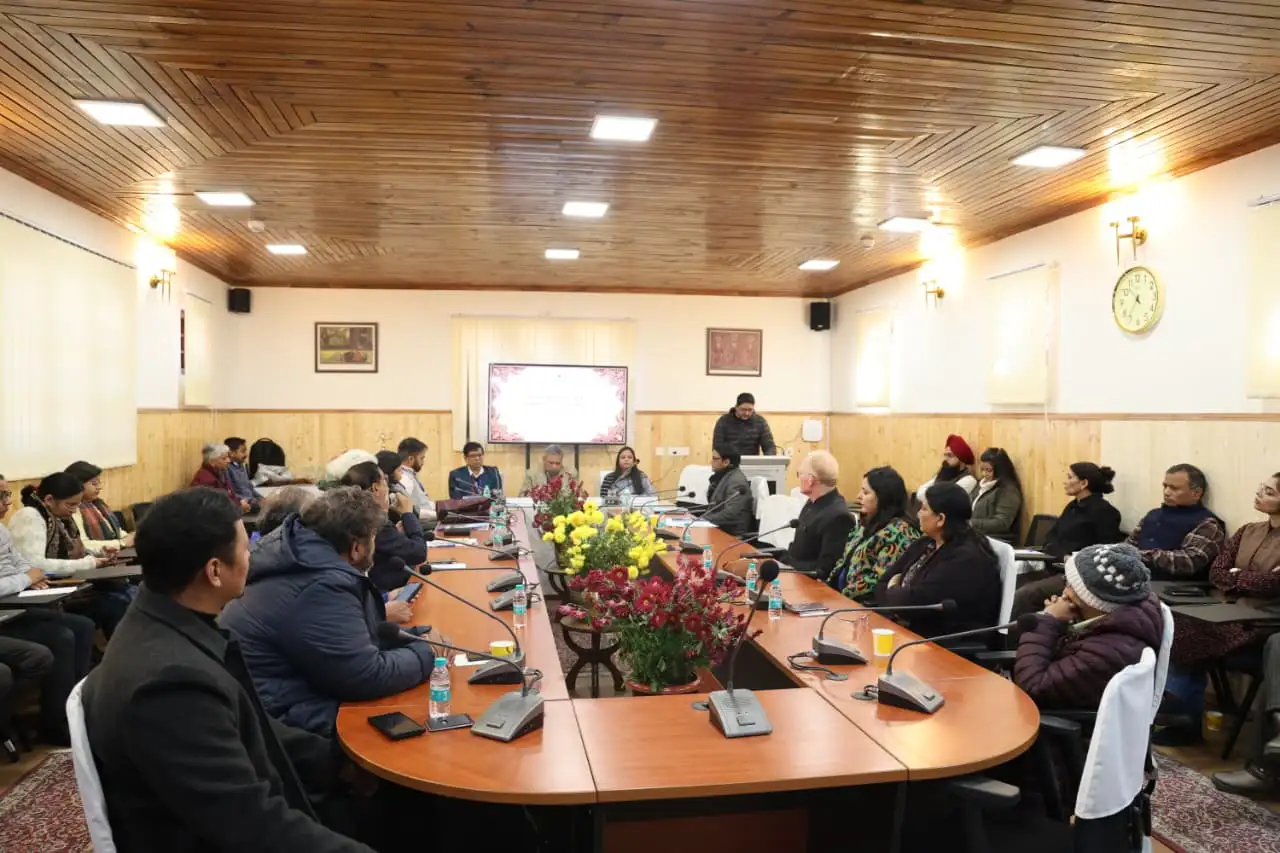
 A three-day National Seminar titled ‘Diversity and National Integration: Addressing Contemporary Challenges’ commenced today at the Indian Institute of Advanced Study (IIAS), Rashtrapati Nivas, Shimla. Scheduled from 18 to 20 November 2026, the gathering brings together leading scholars, faculty members, researchers, and subject experts from across India to examine the evolving dynamics of national unity within the country’s complex social, cultural, political, and economic landscape.
The inaugural session opened with the traditional lighting of the ceremonial lamp, followed by a welcome address from Dr. Rajeev Kumar Mishra, Librarian and Academic Resource Officer at IIAS. Seminar Convener Dr. Bhanu Pratap Singh, Assistant Professor at the Institute of Educational and Developmental Studies (IEDS), Noida, introduced the core theme, outlining the academic framework and objectives of the conclave. Keynote speaker Dr. Suraj Kumar from Indira Gandhi National Open University (IGNOU), New Delhi, and special speaker Dr. Prarthna Agarwal Goel from the Delhi School of Economics, University of Delhi, shared critical insights on the subject.
In his presidential address, IIAS Director Prof. Himanshu Kumar Chaturvedi emphasised that true national integration extends far beyond political unity and territorial integrity. He noted that genuine cohesion requires deep engagement with India’s social, cultural, and intellectual diversity, urging scholars to foster dialogue that strengthens a shared national consciousness while honouring pluralistic traditions. Moderated by IIAS Sales and Public Relations Officer Dr. Akhilesh Pathak, who also delivered the vote of thanks, the opening session concluded with the National Song and the National Anthem.
Moving past conventional political definitions, the seminar explores how India’s civilisational ethos—rooted in dharma, anekāntavāda, and sarva dharma sambhava—aligns with the constitutional values of justice, liberty, equality, and fraternity. Deliberations centre on ensuring that linguistic, regional, or social differences act as catalysts for collective strength rather than exclusion, addressing pressing themes such as caste inequalities, constitutional morality, federalism, and the changing nature of citizenship.
Across its three-day schedule, the seminar pairs foundational philosophy with urgent contemporary challenges. Day one features paper presentations on democratic participation, Indian Knowledge Systems, spiritual humanism, and performing arts. Day two shifts focus to demography, internal migration, human capital, regional economic imbalances, and the Uniform Civil Code, while the final day will examine artificial intelligence, national sovereignty, digital inclusion, online hate speech, and future policy pathways. By bridging disciplines from history and philosophy to economics and media studies, the conclave aims to generate actionable policy recommendations and foster long-term academic collaboration.
CM Directs DCs and SPs to Step Up Ground Action Against Chitta in Himachal
Sponsored
Nurturing Creativity – Keekli Charitable Trust, Shimla