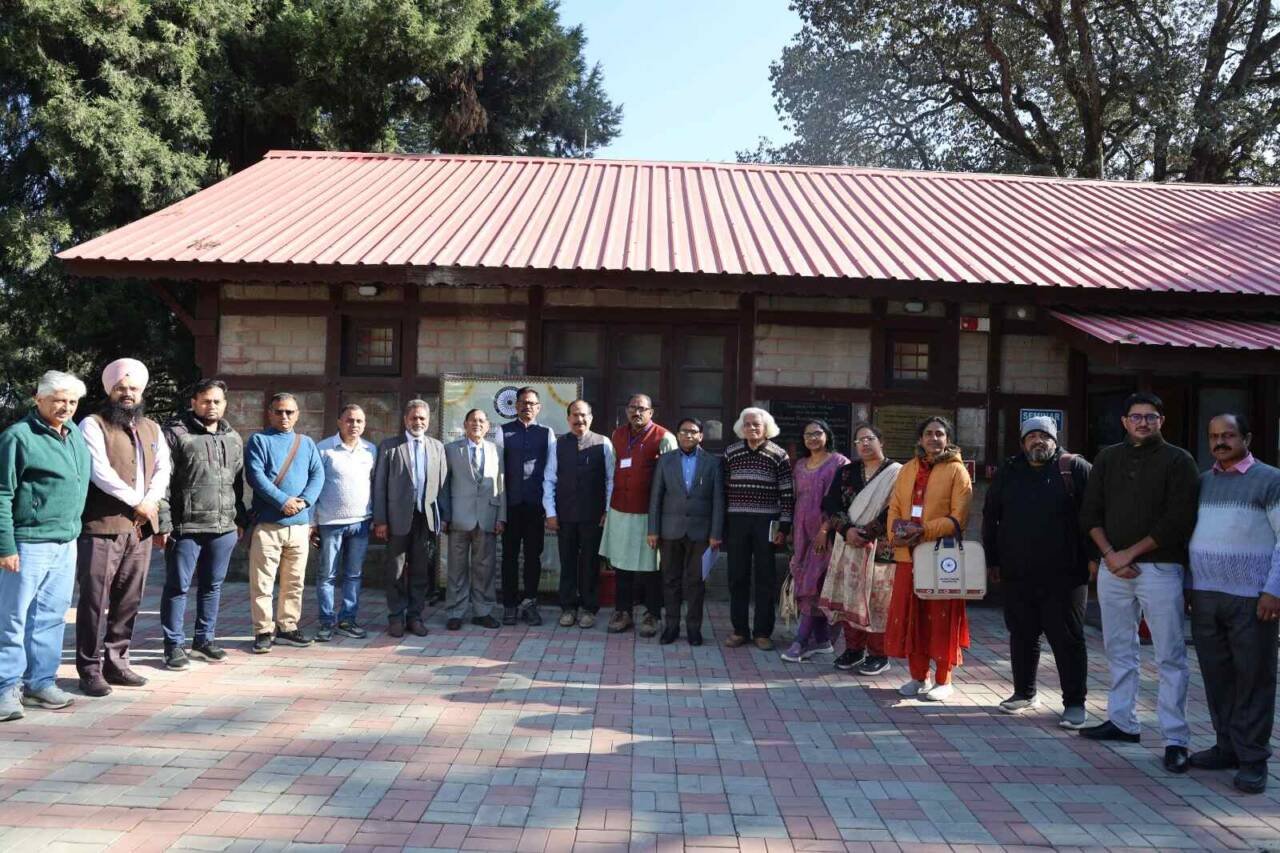
 A three-day national seminar exploring how India’s performing and traditional arts can drive sustainable livelihoods concluded on Sunday at the Indian Institute of Advanced Study (IIAS), Rashtrapati Nivas, Shimla. Held from November 27 to 29 under the guidance of IIAS Director Prof. Himanshu Kumar Chaturvedi, the event brought together scholars, economists, artists, and legal experts to examine the economic value of cultural heritage under the vision of Viksit Bharat 2047.
Framing classical dance, theatre, folk arts, crafts, and festivals within the global concept of the ‘Orange Economy’, participants deliberated on turning artistic innovation into viable economic growth. Across five academic sessions, researchers presented 24 papers covering classical dancers’ livelihoods, revitalising Kalarippayattu, expanding market access for Basohli miniature paintings, cultural tourism in Kerala, and digital entrepreneurship for rural artisans. Experts also emphasised protecting traditional knowledge through Geographical Indication (GI) tags and safeguarding creators against unfair contracts, digital piracy, and artificial intelligence challenges.
At the valedictory session, Himachal Pradesh University Business School Director Prof. Shyam Lal Kaushal delivered the keynote address on bridging culture and commerce. Seminar Convener CMA (Dr.) T. Rajesh of the University of Kerala presented the proceedings report, while IIAS Fellow Prof. Sanjay Bhatt shared concluding remarks from the chair. Earlier, IIAS Librarian Dr. Rajeev Kumar Mishra welcomed the gathering, and Public Relations Officer Dr. Akhilesh Pathak moderated the event and delivered the vote of thanks.
Preserve Survivor Stories Beyond Textbooks Governor Tells Youth
Sponsored

Nurturing Creativity – Keekli Charitable Trust, Shimla