
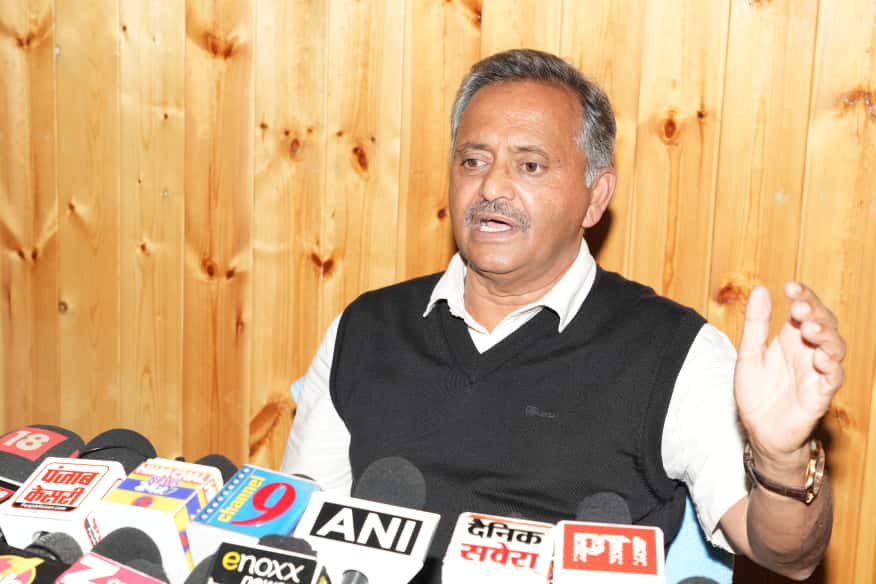
 Chief Minister’s Principal Media Advisor, Naresh Chauhan, has called on the Central Government to accept responsibility for imposing what he termed as excessive and unjust Goods and Services Tax (GST) over the past eight years. While welcoming recent reforms in the GST framework, Chauhan asserted that the Centre owes an apology to the people—particularly the poor and middle class—for the economic burden they have borne since the tax’s implementation in 2017.
Addressing a press conference, Chauhan alleged that essential commodities such as food, clothing, and pulses were heavily taxed, affecting the daily lives of ordinary citizens. He claimed the Centre collected over ₹55 lakh crore through GST, a system that, according to him, has disproportionately affected economically weaker sections.
“From the very beginning, the Congress Party opposed the flawed structure of GST,” Chauhan said. “Rahul Gandhi rightly called it the ‘Gabbar Singh Tax’, and what the BJP-led Centre is now calling ‘reform’ is nothing more than political compulsion and delayed repentance.”
He argued that the reforms come at a time when the BJP fears electoral backlash in upcoming state elections, including Bihar. Chauhan emphasized that the foundation of GST was laid responsibly during UPA-2, with expert consultations aiming for a fair, uniform tax structure. However, after 2014, he said, the BJP altered the system, introducing multiple tax slabs—5%, 12%, 18%, 28%, and even 40%—that led to financial strain for the public.
He also accused the Centre of favoring large corporates while ignoring the hardships of common citizens who continue to face inflation, unemployment, and reduced purchasing power. “Instead of passing on the benefits of cheaper Russian crude oil to the public, the Centre kept fuel prices high to benefit a few corporate houses,” he added.
Chauhan concluded that the so-called GST reforms are a delayed acknowledgment of the government’s past mistakes and urged the Centre to not only reform policies but also accept accountability for the economic pressure placed on millions of Indians over the past eight years.

Nurturing Creativity – Keekli Charitable Trust, Shimla