
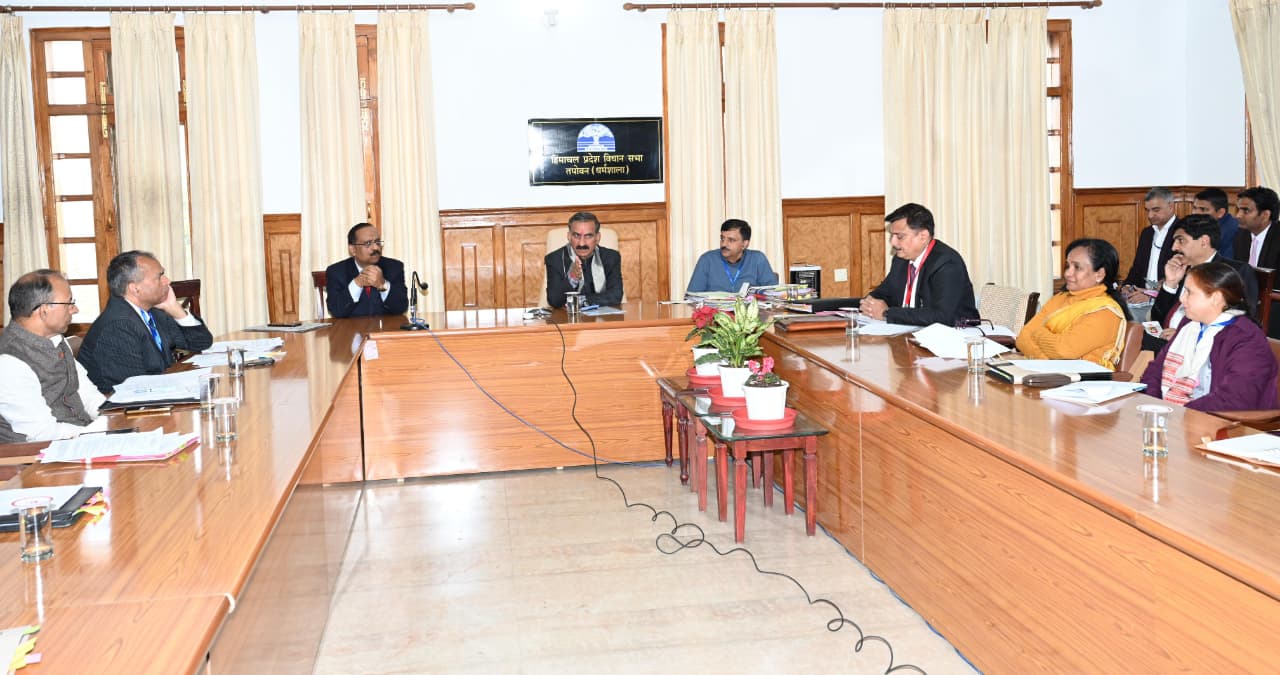
 CM Sukhu, while presiding over the sixth State-level meeting of the Narcotics Coordination Centre (NCORD) in Dharamshala, called for a united, State-wide campaign to eradicate chitta and other narcotic substances from Himachal Pradesh. The meeting was attended by representatives from central agencies including NCB, ED, DRI, the Postal Department and the Railway Protection Force, along with senior state officials.
The Chief Minister revealed that special police and CID teams have been deployed in 234 drug-sensitive Panchayats and directed Deputy Commissioners to set up Anti-Drug Committees in these areas. He urged youth, Panchayati Raj representatives, Mahila Mandals, and voluntary groups to actively participate in transforming the fight against drugs into a mass movement.
Emphasizing strict action against drug networks, the Chief Minister instructed district administrations to identify properties acquired through drug trade and submit detailed reports by 10th December. He stated that such properties will be demolished and those involved will face stringent action. He also disclosed that 60 government employees, including 15 police personnel, have been found involved in chitta trafficking. Five have already been dismissed and action is underway against the rest. Details of all government employees linked to the drug trade have also been sought by 10th December.
Sukhu announced that Anti-Chitta Walkathons will soon be organised at the district and sub-division levels to strengthen public awareness. He added that the government is reinforcing counseling, treatment and rehabilitation services, while also mandating drug testing for all government recruitments. Anti-Drug Clubs, Prahari Clubs and peer education programmes are being strengthened across schools and colleges. Surveillance on cannabis cultivation has been tightened, pharmaceutical units are being thoroughly inspected, and the Prosecution Directorate has been tasked with expediting NDPS appeals and improving conviction rates. Drug control parameters related to supply, demand and harm reduction will now be included in officers’ ACRs.
To further intensify citizen participation, the Chief Minister announced the launch of a “Chitta Information Reward Scheme”, under which informants providing credible information on chitta trade will be rewarded between ₹10,000 and ₹10 lakh. Information can be shared via helpline 112 or the nearest police station, with rewards issued within 30 days. He appealed to the public to contribute actively to the anti-drug campaign.
Highlighting the State’s strong enforcement record, the Chief Minister said that in the last three years, 5,642 NDPS cases have been registered—an increase of 28 percent—with 8,216 arrests and the seizure of 36.657 kg of chitta. The PIT-NDPS Act has been invoked, 46 major traffickers have been detained, and illegal assets worth ₹48 crore have been confiscated.
Himachal Pradesh is also the first State to classify Panchayats into red, yellow and green categories, identifying 12,000 individuals under this model, now nationally recognized as an exemplary approach.
Recent operations include a Statewide Naka drive on 17–18 November, during which 16,441 vehicles were checked, leading to 13 NDPS cases and significant seizures. On 22 November, simultaneous raids at 121 locations disrupted 10 major trafficking networks. A special operation on 25 November around educational institutions led to inspections of 41 campuses and 598 shops, resulting in 12 cases and 385 challans.
The Chief Minister reiterated that safeguarding the youth and securing a drug-free future remain top priorities of the government.


Nurturing Creativity – Keekli Charitable Trust, Shimla