
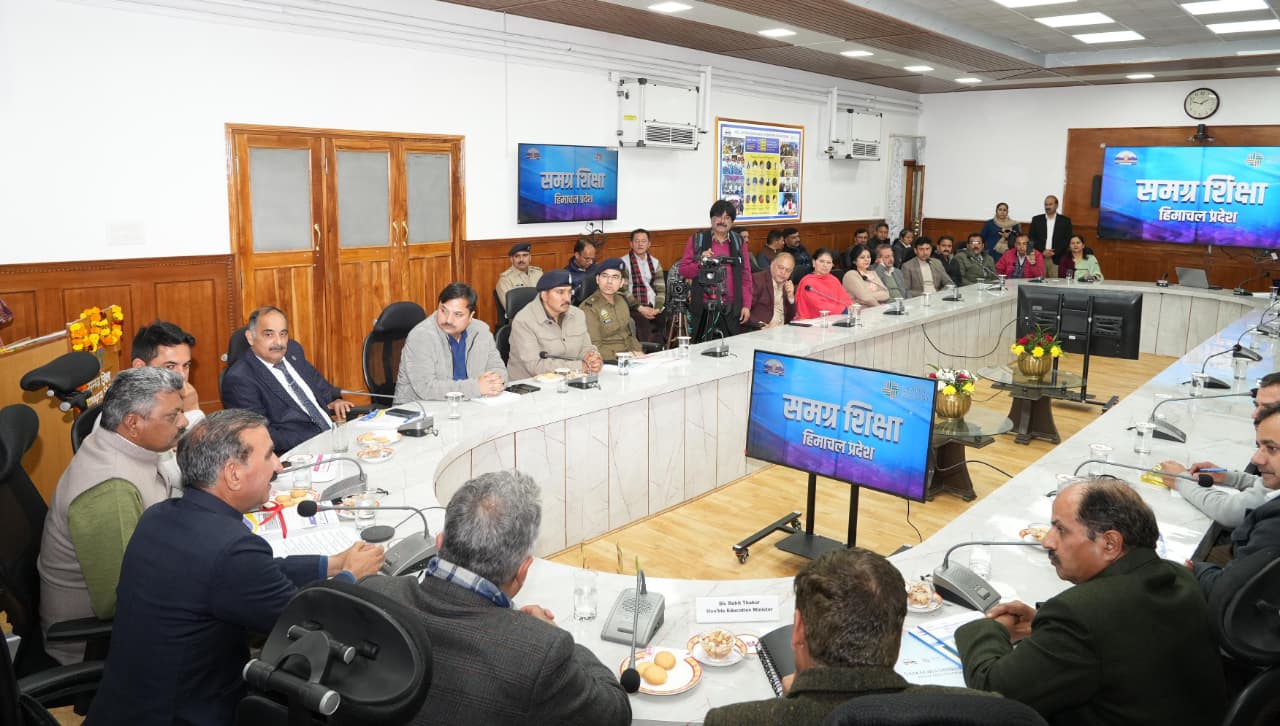
 CM Sukhu today inaugurated modern, state-of-the-art facilities at the Directorate of Samagra Shiksha, including the Vidya Samiksha Kendra (VSK), Education Gallery, Programme Management Studio Conference Area, a new Conference Hall, and a modern Central Heating System.
Addressing the gathering, the Chief Minister said that these advanced facilities would enhance both administrative efficiency and academic governance, marking the beginning of a new era of digital education in Himachal Pradesh. He emphasized that the initiative reflects the visionary approach of the state government and reinforces education as the cornerstone of overall development.
Highlighting the government’s focus on education over the last three years, CM Sukhu pointed out Himachal Pradesh’s remarkable rise in national rankings for education quality, moving from 21st to 5th position. This progress, he noted, is the result of collective efforts by teachers, students, parents, and the government’s commitment to excellence.
The Vidya Samiksha Kendra was described as a milestone in the state’s digital transformation of education, providing real-time data on teaching, learning outcomes, student assessment, attendance, resource management, and school administration. Initiatives such as ‘Abhyas Himachal’, geo-spatial smart attendance systems, and ‘Nipun Pragati’ are enabling data-driven insights to identify learning gaps, making education more transparent and outcome-oriented.
CM Sukhu also highlighted the ‘Shikshak Sahayak’ digital tool, which supports teachers by providing access to teaching materials and academic resources, improving teaching quality and reducing administrative workload.
The Chief Minister stressed that the government is focusing not only on new institutions but also on strengthening and modernizing existing schools, ensuring equitable access to quality education across remote and rural areas, and equipping students with 21st-century skills.
He announced a ban on students carrying mobile phones within school premises from pre-nursery to Class 12, while teachers may keep phones in staff rooms. The curriculum will be enriched with music, culture, and future-oriented subjects.
Further, the government plans large-scale recruitment in the Education Department, including temporary and regular appointments, and the recruitment of multi-utility workers. From the next academic session, primary school-level sports competitions will be organized. CM Sukhu expressed confidence that by 2032, every Assembly constituency will host some of the best schools in the country, making Himachal Pradesh a leader in education. Plans for a new transfer policy and the creation of a special cadre for Rajiv Gandhi Day Boarding Schools and CBSE schools were also mentioned.
On the occasion, the Chief Minister released the Sankalp Workbook.
Education Minister Rohit Thakur highlighted that the state has achieved a literacy rate of 99.30 percent, implemented cluster school systems for optimal resource utilization, and provided free JEE and NEET coaching for meritorious students. He noted the state’s significant improvement in the Performance Grading Index (PGI) and various qualitative reforms widely appreciated at the national level.
Project Director Samagra Shiksha Rajesh Sharma detailed the department’s achievements, including teacher training at IITs and IIMs and the use of modern technology to enhance teaching skills.
In a major step towards global collaboration, the state has signed an MoU with UNESCO under the Himachal Pradesh Futures Programme to promote innovation in education, advance Sustainable Development Goals, and strengthen international partnerships.


Nurturing Creativity – Keekli Charitable Trust, Shimla