
 Astronomers have revealed how a subtle, nearly invisible solar eruption, known as a Stealth Coronal Mass Ejection (CME), caused an intense geomagnetic storm on Earth in March 2023, highlighting the challenges in predicting space weather.
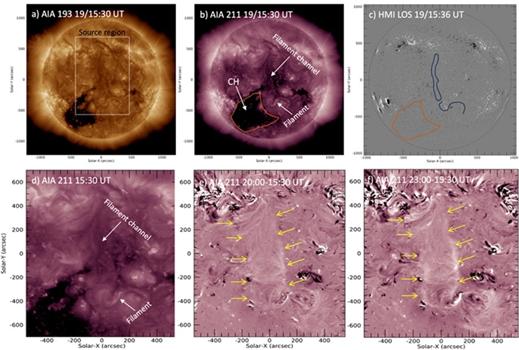
Unlike typical CMEs, which are often accompanied by X-ray flares or radio bursts, stealth CMEs leave almost no visible signatures on the Sun. Using data from NASA’s Solar Dynamic Observatory (SDO), Solar Orbiter (SolO), STEREO-A, and WIND, researchers at the Indian Institute of Astrophysics (IIA) studied the March 19, 2023 event. They found that the CME, originating near a coronal hole—an opening in the Sun’s magnetic field—was carried by high-speed solar wind all the way to Earth, intensifying the geomagnetic storm.
The study revealed that the CME’s magnetic cloud rotated during its journey and maintained enhanced plasma density at its boundaries, with southward magnetic components that are particularly effective in triggering geomagnetic storms. Modeling of the storm intensity showed strong agreement with observed geomagnetic indices, confirming the significant impact of even weak solar eruptions.
Lead researcher P. Vemareddy explained, “Stealth CMEs are extremely difficult to detect but can still cause powerful space weather effects, making forecasting a major challenge.”
Published in The Astrophysical Journal, the study underscores the crucial role of subtle solar events in Earth’s space weather and the importance of multi-spacecraft observations in understanding them.


