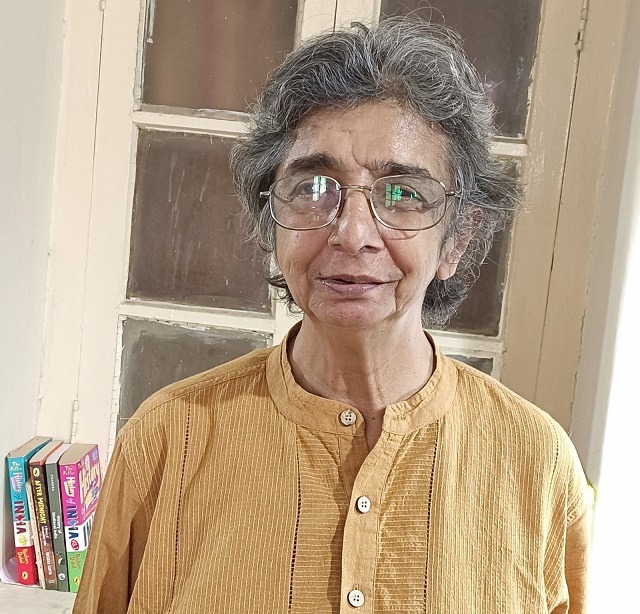
 Lakshmi Rameshwar Rao – Hyderabad
The Centuary 1757 to 1857
In the hundred years, 1757 to 1857, new trends came to be in the Indian Subcontinent. Mughal social reform, administrative and political change have left a rich legacy of art, the arts, the sciences, architecture, Arabic, Persian and Urdu literature.
Following the Battle of Plassey, in 1757, the British were replacing the Mughals as the dominant power in India, marking the transformation of the British East India Company from being a trading corporation to becoming the dominant political and military power in India.
The 1857 uprising, first war of independence or mutiny, came as a response to and result of these developments, after which Company rule ended and the British Crown took direct control.
Language and Vernaculars
‘Sanskrit’, the language was known as ‘devavani’ (language of the Gods), meaning “prepared”, “pure” and “refined” or “perfect”. Being the language of philosophers, scientists, mathematicians, poets, grammarians, and jurists, Sanskrit became the foundation of Indian culture as Persian had been.
Education was religion-oriented. Language teaching from childhood received attention. The content of education was not uniform as education was the prerogative of the rich and upper strata of society. The Mughals were responsible for the creation of literary masterpieces in Arabic, Persian and Urdu. Arabic and Persian were the languages that received Mughal patronage. Philosophical treatises relating to religious and spiritual matters were composed in Arabic. Sanskrit was also patronised by the Mughals, in particular by Dara Shikoh and the Aravidu lineage in the Vijayanagara court, by the Nayaks of Tanjore, the chiefs of Travancore and Cochin; Mahakavyas, Sreshta kavyas, Champukavyas and Natakas. Historical ‘kavyas’ flourished along with various genres of Sanskrit literature.
Babur, the founder of Mughal rule in India, was an accomplished poet in Turkish. His memoirs were written in Turki. The Baburnama was translated into Persian by the poet Abdul Rahim Khan-i-Khanan, known especially for his couplets. He lived in Akbar’s court. A mausoleum that marks his grave is to be seen in Nizamuddin, Delhi.
Persian, one of the oldest Indo-European languages, was introduced into the Indian subcontinent by the rulers of Central Asia in the 13th century. Humayun and his father, Babur, encouraged Persian poets to come to India. Notable were Faizi, Urfi, Naziri, Talib Amah, Kalim, Ghani Kashmiri, Saib Bedil and Mirja Muhammed Ali Saib of Tabriz, who developed a new Indian style in Persian literature (poetry). “Sabaq Hindi” was patronized by emperors from Akbar to Shahjahan. During Mughal rule, classical Indian texts were translated into Persian. Persian and Sanskrit had strict grammars, religious and philosophical texts and commentaries. There were books on the political changes of the time.
Persian, which had been a court language for long, was now declining. Urdu developed as a dialect of the Muslims of the Deccan and South India from the 14th century onwards as Dakhani. Well-recognised Urdu writers and poets include:
-
Mir Dard (1720–84)
-
Mir Taqi Mir (1720–1810)
-
Ghalib (1796–1869)
-
Sauda (1713–1780)
-
Mir Hasan (1726–1869)
Urdu poet Firaq Gorakhpuri wrote, “Sar zamin-e-hind par aqwaam-e-alam ke firaq kafile guzarte gae Hindustan banta gaya”, translated as, “In the land of Hind, Caravans of the peoples of the world kept coming and India kept getting formed”.
Hindi, Punjabi, Bengali, Kannada, Tamil, Kashmiri, Malayalam, Telugu, Marathi, Gujarati, Oriya and Sindhi were languages that flourished. Among the themes of the writings are religious works and epic themes. The literatures in the different languages include biographies, stories, poems, historical works and grammars. The Bible was written in different languages and translated widely. Printing presses were set up and so books became more easily available. Texts were easily translated into English. Indians began to use and write in English.
Persian, the lingua franca and language of creative literature and philosophy, became the vehicle of Sufi mysticism. Some of the classics of literature, such as Rumi’s Mathnawi, Firdausi’s Shah Nama, Omar Khayyam’s Rubaiyat, and Saadi Shirazi’s Gulistan, were in Persian.
Though the Mughals were native speakers of Chagatai Turkic, Akbar established Persian as the official/state language in 1582. Akbar and Jahangir commissioned Persian translations of the Ramayana and the Mahabharata. Dara Shikoh translated the Upanishads into Persian.
Of Persian origin is the word “Hindu”, for people living in the region beyond River Indus. “Hindavi” (Hindi) was the language of large parts of India. Though Persian had played a key role in communication and literature, it was replaced by English in the late 19th century. Persian, the prestigious language of culture in various empires (Western Asia, Central Asia and South Asia), had begun to face oblivion.
The medieval Bahamani Sultanates, successors of the Deccan Sultanates and the Hindu Vijayanagara kingdom, retained the influence of Persian culture. The Sikh gurus as well as the Maratha ruler Shivaji were well-versed in Persian. Persian romances, such as Laila Majnu, were translated into many Indian languages.
Urdu first emerged as the common language of soldiers. Elements from Persian, idioms, styles, syntax and script were borrowed from and mixed with local dialects, such as Poorvi and Brajbhasha. Besides Persian, Urdu, Punjabi, Phusthi, Sindhi, Beluchi and Kashmiri flourished under the patronage of regional powers. Khadiboli, a mixed version of Hindi, became popular in the 15th and 16th centuries. The language developed from the dialects of Brajbhasha, Awadhi, Rajasthani, Maithili, Bhojapuri and Malwi.
Sufi saints like Nizamuddin Aulia chose Urdu for discourse. Many madrasas started focusing on religious education with more emphasis on Arabic scriptures.
Raja Rammohun Roy wrote treatises in Persian. He started India’s first Persian newspaper Mirat-ul-Akhbar in 1823. The first Persian printing press was set up in Calcutta. Non-Muslim elites in Bengal were encouraged by the Bengali Hindu gentry and aristocracy to adopt appropriate aspects of Persian culture, dress, social practices and literary taste. Persian was the language of the courts for correspondence and record-keeping.
Governor-General Warren Hastings was well-versed in Persian and founded the Calcutta Madrasa where Persian, Arabic and Islamic Law were taught. Remnants of Persian and judicial terms such as adalat, mujrim, munsif and peshkar are still used in courts across India. Persian began to decline in 1835 when English was made the language of governance by Lord Macaulay’s education policy.
The Mughal period witnessed a many-sided cultural activity and saw the emergence of a national culture, which can be called a second classical age comparable to the earlier Gupta Age. In the Deccan, Adil Shahi rulers of Bijapur patronized Persian poets including Malik Qummi and Mulla Zohuri. Ibrahim Adil Shah II, a Sultan of Bijapur, was a patron of Dakhani literature and an author of a book on music.
Swaramelakalanithi, also a treatise on music, was written by Ramamatya of Kondavidu in 1550, describing 20 Janak and 64 Janya ragas. One Somanatha wrote incorporating some north Indian styles in 1609.
The 16th and 17th centuries were a period of experiments and the fusion of the north and south Indian elements. The fine arts of music and dance and drama were patronized by regional kingdoms up to the 18th century. Muhammed Shah, a later Mughal, encouraged music in North India patronizing Adranga and Sadaranga, two music composers of Khayal at his court.
Raja Man Singh of Gwalior is credited with the perfecting of Dhrupad, a variant style of North Indian music. Music developed with the spread of the Bhakti movement. Bhakti saints preached their devotional teachings in the vernacular to communicate about Truth and the importance of Bhakti in the devotee’s own life.
Akbar patronized Tansen, one of the nine gems of his court, who is said to have been a disciple of Haridas of Brindavan. An exposition of Saivism and Vishnavism, Irusamaya Vilakkam, was written by Haridas. Tansen is known to have created the ragas Mian Ki Malhar, Miyan ki Todi and Darbari. At this time folk music was incorporated into the classical music of the court as also Thumri and Tappa. Music was patronised by South Indian kingdoms like Tanjore.
Traditional dance continued in the Mughal period both in the North and in the South. Kathak, a new dance, developed at this time. The Natya Shastra is an ancient Indian treatise on the performing arts that encompasses theatre, dance and music. It is attributed to Sage Bharata Muni, who is believed to have composed it during the 400-year period (200 BCE and 200 CE). The text consists of 36 chapters with a cumulative total of 6,000 poetic verses describing performance arts.
The Qutub Shahis of Golkonda were patrons of Persian scholarship, literature and Dakhani. Burhan Qati is a Persian dictionary that was compiled by Muhammad Hussain Tabrezi. Dakhani flourished in Gujarat, Bijapur, Golkonda, Aurangabad and Bidar.
Women Sanskrit poets deserving special mention are Tirumalamba, who wrote Varadambikaparinaya, and Ramabhadramba and Ragkinathabhyudaya.
Sanskrit never was a language for chanting mantras in temples and for religious ceremonies. The major part of Sanskrit literature had nothing to do with religion but dealt with philosophy, law, science, literature, grammar, phonetics and interpretation. For the language of free thinkers who questioned everything and expressed a wide spectrum of thoughts on various subjects, Sanskrit became the language of scientists in ancient India.
Sanskrit is not just one language. There are several Sanskrits. Panini’s Sanskrit is Classical Sanskrit. The earliest Sanskrit work is the Rig Veda, composed around 2000 B.C. It consists of 1,028 hymns to nature gods such as Indra, Agni, Surya, and Varuna. In Panini’s use, Sanskrit came to be highly developed. It was a powerful vehicle of expression in which scientific ideas could be expressed with great precision and clarity. After observing the sounds in speech, Panini arranged the letters of the Sanskrit alphabet in a very scientific and logical manner.
Samveda is Rigveda set to music. Verses of Yajurveda were taken from the Rigveda. The verses of Atharvaveda were perhaps a later addition to the Samhitas, earlier known as ‘trayi vidya’ consisting of the Rigveda, Yajurveda and Samveda. The Brahmanas were books written in prose. They give the method of performing the various yagyas. The last part of the Veda is the Upanishad. The Aranyaks are forest books.
The Mahabharata was probably written before Panini. We know this as Panini has referred to the Mahabharat in his work. Ramayana, Mahabharata, Puranas, and the works of Kalidas are not part of Vedic literature. Almost all of Sanskrit literature is non-Vedic Sanskrit literature.
Goswami Tulasi Das, author of Ramcharitamanas, was the most famous Hindi poet of the 16th century. Tulasi Das inspired poets like Agra Das and Nabhagi Das who composed poetry on the lives of the Vaishnava saints.
(The writer has a Masters in Adult Education from Jamia Milia Islamia. She has many years teaching experience at the school level as also ten years of experience in book publishing and some published writing in newspapers and more students’ books. Lakshmi has retired and lives in Hyderabad.)
Akbar the Great: Governance, Culture, and the Mughal Golden Age – Feature
Sponsored

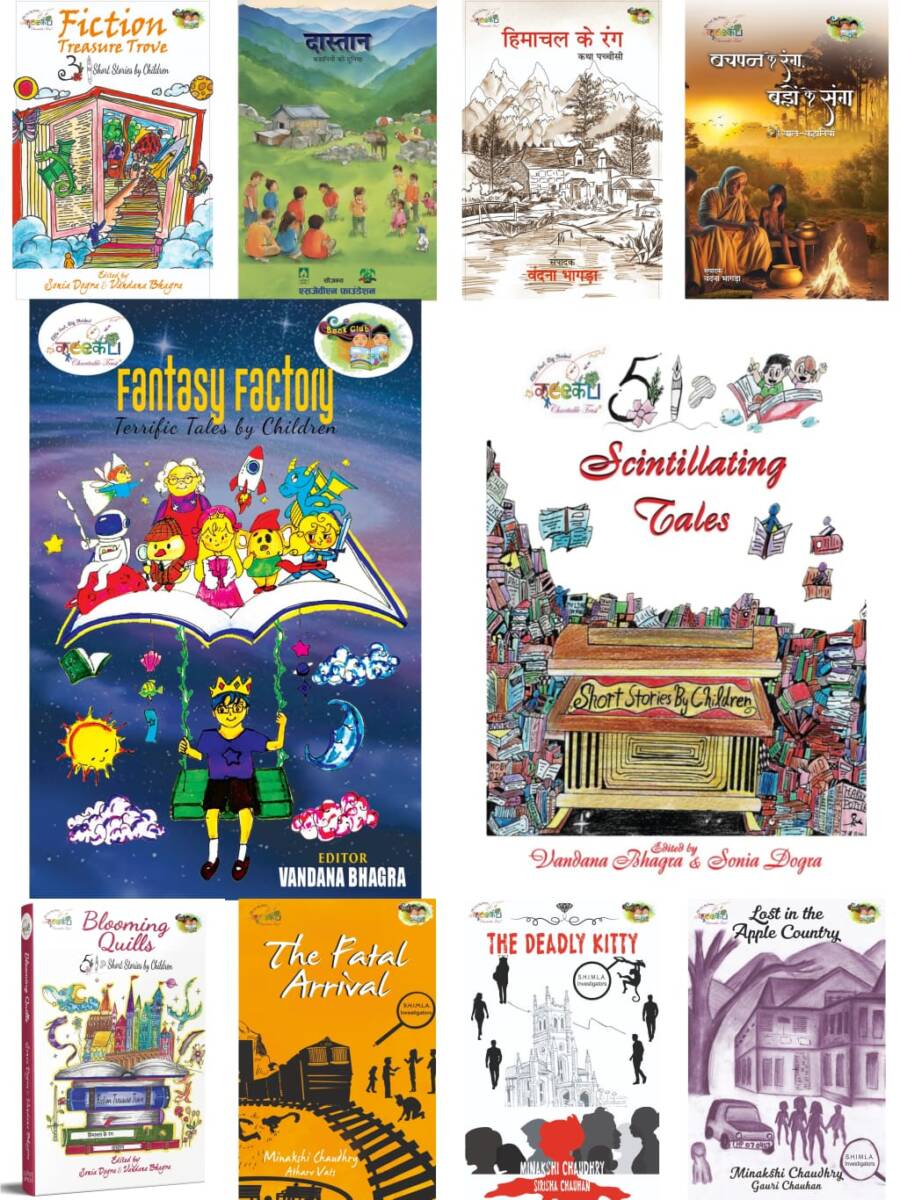
Nurturing Creativity – Keekli Charitable Trust, Shimla