
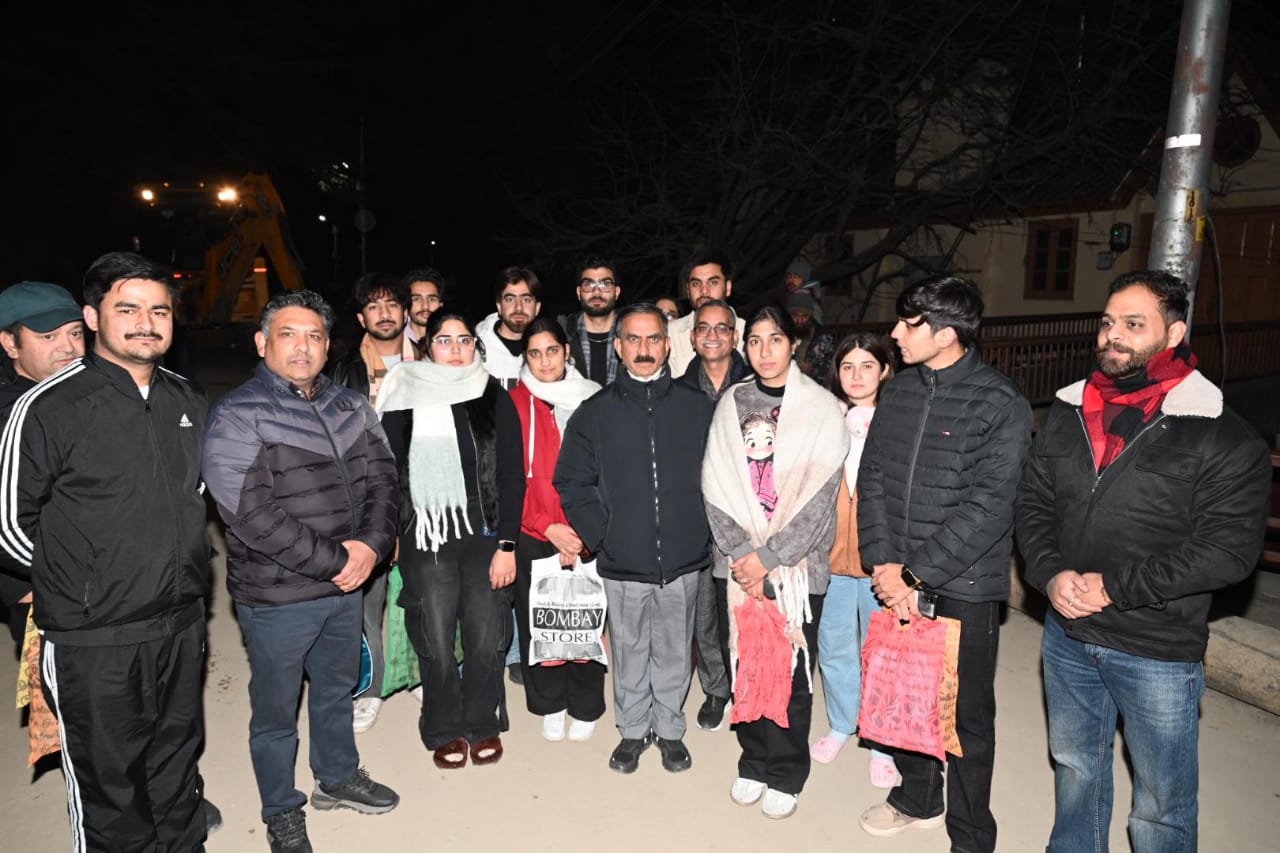
 CM Sukhu today directed the Municipal Corporation Shimla to strengthen tourist facilities and improve cleanliness across the city, emphasizing that the comfort and safety of visitors must be ensured without compromising the needs of local residents.
After inspecting Mall Road and other areas of Shimla on Saturday evening, the Chief Minister instructed officials to strictly ensure that vendors do not charge more than the prescribed rates for food items and other goods. He also stressed that the rules and standards laid down by the Directorate of Health Safety and Regulation and the Food Safety and Standards Authority must be rigorously enforced to maintain food quality, hygiene and safety.
Highlighting the importance of waste management, the Chief Minister said that proper collection and disposal of waste must be ensured in a proactive and strict manner, as cleanliness directly reflects the image of the state.
He said that tourists visiting Shimla should have a pleasant and memorable experience, while equal importance must be given to the requirements of the local population. The state government, he added, is continuously improving urban public services and making them more accessible.
The Chief Minister informed that the second phase of the Citizen Connect Programme has been launched under the theme “Clean City, Prosperous City”. Keeping in view rapid urbanization, population growth and evolving civic needs, the government is adopting an inclusive and sustainable approach to urban development.
He also highlighted the Mukhyamantri Laghu Dukandar Kalyan Yojana, under which small shopkeepers are being provided relief through a one-time settlement facility. Shopkeepers with non-performing loan accounts of up to Rs. one lakh will be eligible for settlement up to the same amount, while those with loans between Rs. one lakh and Rs. two lakh will receive assistance of up to Rs. one lakh.
The Chief Minister said that urban services have been digitized through the Citizen Service Portal. In the first phase, nine online services were introduced with over 2.5 lakh citizen registrations, while nine more services have been added in the second phase to enhance transparency and ease of access.
He further said that under the Digital Door Plate system, every urban household is being assigned a unique digital identity, which will improve transparency, accountability and efficiency in urban governance.


Nurturing Creativity – Keekli Charitable Trust, Shimla