
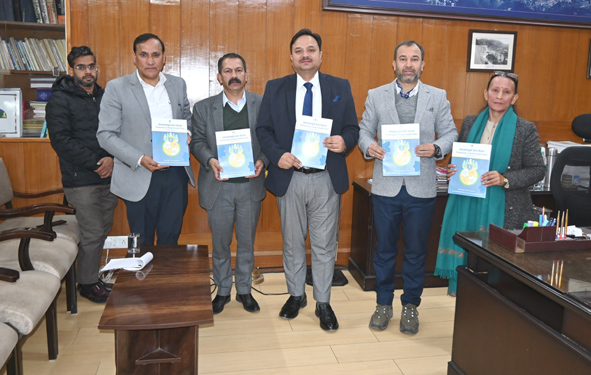
 Deputy Commissioner Anupam Kashyap on Monday released the Potential Linked Credit Plan (PLP) document for the financial year 2026–27 for Shimla district, prepared by the National Bank for Agriculture and Rural Development (NABARD). The plan estimates a total credit potential of around ₹9,356 crore for the priority sector, aimed at strengthening agriculture, MSMEs and overall economic development in the district.
Speaking on the occasion, the Deputy Commissioner said the PLP provides a comprehensive assessment of credit potential across key sectors, including crop loans, agriculture and allied activities, agricultural infrastructure, export credit, education, housing, social infrastructure and other development-oriented activities. He said the document would serve as a roadmap for planned and targeted credit flow in the district.
Highlighting past performance, he said that against an annual credit target of ₹8,208.93 crore for the year 2024–25, the district achieved ₹6,025.63 crore, registering 73.40 percent achievement of the target. Sector-wise performance under the Annual Credit Plan 2024–25 showed 62 percent achievement in agriculture, 93 percent in the MSME (Micro, Small and Medium Enterprises) sector, and an overall achievement of 73.40 percent.
Under the PLP for 2026–27, a credit potential of ₹5,400.48 crore has been projected for the agriculture sector, while ₹2,534.08 crore has been estimated for the MSME sector. The Deputy Commissioner said the implementation of this plan would provide fresh momentum to agriculture, entrepreneurship and inclusive economic growth in Shimla district.
NABARD District Development Manager Vivek Abrol explained that the Potential Linked Credit Plan assesses the scope for leveraging physical and economic potential in various segments of the rural economy through institutional bank credit. Based on this PLP, the Lead District Manager prepares the Annual Credit Plan for the ensuing financial year under the RBI’s Lead Bank Scheme.
He added that the PLP document is prepared using data and inputs from agriculture, horticulture and other implementing departments, along with an analysis of past achievements and sectoral performance. Banks are advised to accord priority to credit flow in the priority sector to ensure balanced and sustainable development of the district.


Nurturing Creativity – Keekli Charitable Trust, Shimla