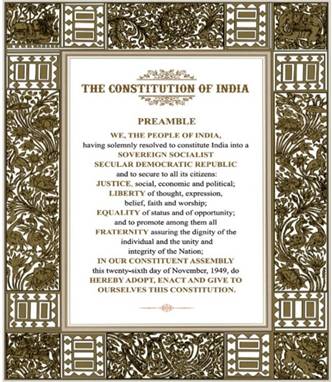
 Republic Day is a landmark in India’s national journey, marking the day the Constitution of India came into effect on 26th January 1950, formally establishing the country as a Sovereign Democratic Republic. While India attained independence on 15th August 1947, it was the adoption of the Constitution that completed the transition to self-governance based on law, accountability, and the will of the people.
Every year, Republic Day is celebrated through ceremonies that reflect India’s democratic institutions and cultural diversity. The national celebration in New Delhi along Kartavya Path features a grand parade displaying military discipline, regional heritage, and cultural tableaux from states and Union Territories. Across the country, flag-hoisting ceremonies, cultural events, and official programmes make Republic Day a shared civic occasion, reaffirming the values enshrined in the Constitution.
The 77th Republic Day in 2026 is celebrated under the theme “150 Years of Vande Mataram”, which runs across the parade, cultural performances, tableaux, and public competitions. The theme highlights the national song’s role in India’s freedom movement, cultural identity, and contemporary aspirations. This year’s parade will host the Presidents of the European Council and the European Commission as Chief Guests, emphasizing India’s global engagement. For the first time, the Indian Army will showcase a Battle Array format, alongside traditional marching contingents and service presentations.
Key highlights of the Republic Day Parade 2026 include:
-
30 tableaux from States, Union Territories, and central ministries, themed around Swatantrata ka Mantra – Vande Mataram and Samriddhi ka Mantra – Atmanirbhar Bharat.
-
Cultural performances by around 2,500 artists at Kartavya Path.
-
Attendance of approximately 10,000 Special Guests representing farmers, artisans, innovators, women entrepreneurs, students, sportspersons, and frontline workers.
-
Nationwide citizen engagement through competitions on MyGov and MY Bharat platforms, including essays, painting, singing, and quizzes linked to the theme. Winners are invited to participate in the national celebrations, connecting public participation with ceremonial events.
The selection of 26th January as Republic Day connects India’s constitutional beginning with its freedom struggle. On 26th January 1930, Purna Swaraj Day was observed as a declaration of complete independence. The Constituent Assembly began its work on 9th December 1946, leading to the adoption of the Constitution on 26th November 1949, and its enactment on 26th January 1950. Through this process, India established itself as a Sovereign Democratic Republic, embedding the aspirations of the freedom movement into constitutional governance.
Republic Day today is celebrated nationwide with flag-hoisting ceremonies, parades by armed forces and students, and cultural performances. The main parade in New Delhi begins at Kartavya Path with the President of India’s arrival, unfurling of the National Flag, 21-gun salute, and the National Anthem. Marching contingents from the Army, Navy, and Air Force, mechanised columns, and defense displays showcase discipline, skill, and coordination. States and Ministries present tableaux reflecting regional culture and national themes, while cultural performances enrich the procession. Bravery awards honor martyrs and exceptional citizens, and the parade concludes with motorcycle displays and the Indian Air Force flypast.
Republic Day celebrations formally end on 29th January with the Beating the Retreat ceremony at Vijay Chowk, a tradition originating from the military practice of withdrawing troops at sunset.


Nurturing Creativity – Keekli Charitable Trust, Shimla