 The Indian Institute of Advanced Study (IIAS), Shimla, inaugurated a two-day national seminar titled “Revisiting the Intersectionality of Religion and Literature in Indian Intellectual Tradition”, aiming to explore the integral relationship between spiritual narratives and literary traditions in India’s epistemological and cultural history.
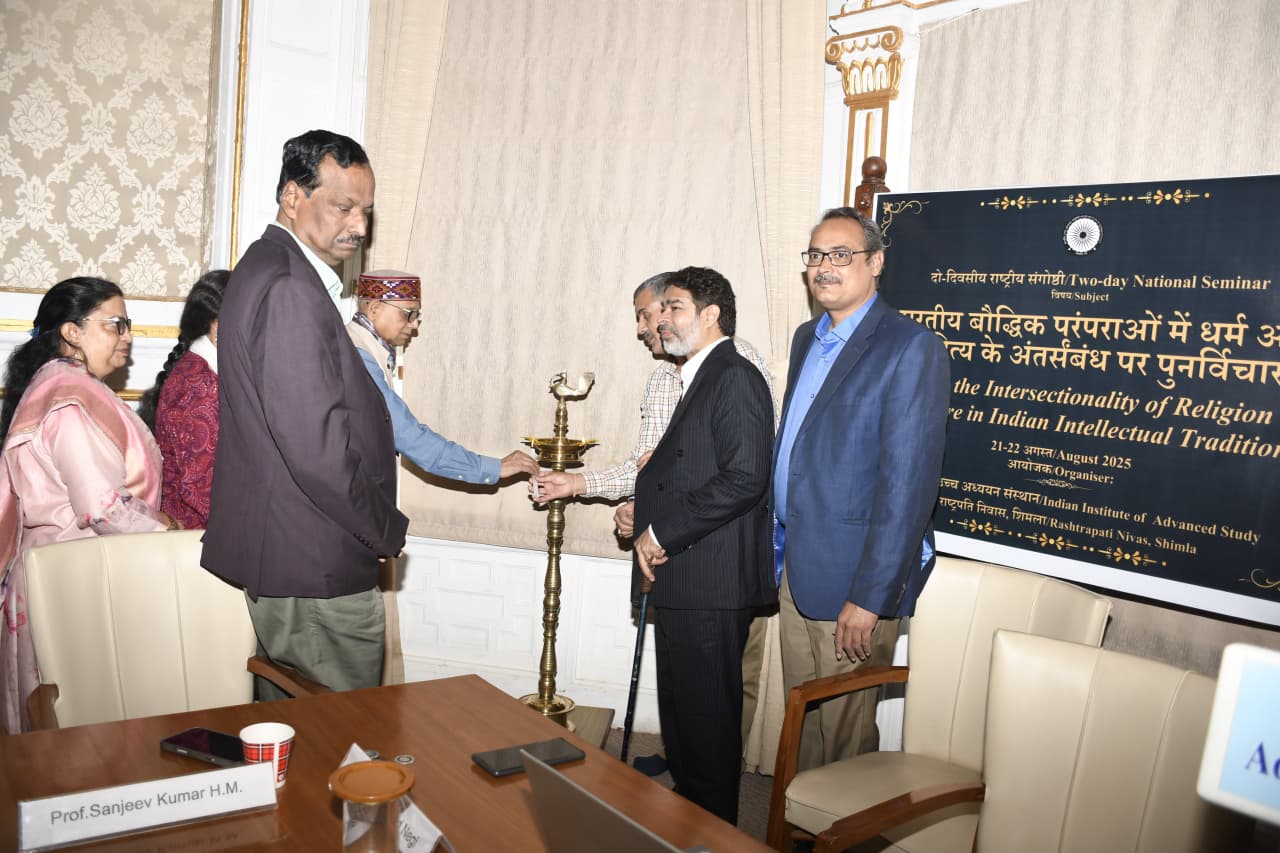
The inaugural ceremony began with the traditional lighting of the lamp by Prof. Balaganapathi Devarakonda (Convener, University of Delhi), Prof. Sanjeev Kumar H.M. (Co-convener), and other dignitaries.
In his welcome address, Prof. Devarakonda emphasized the importance of engaging with religious and literary texts through a decolonial framework that honors indigenous epistemologies and resists reductive colonial readings. He urged scholars to revisit India’s narrative traditions that weave together ethics, aesthetics, and spirituality.
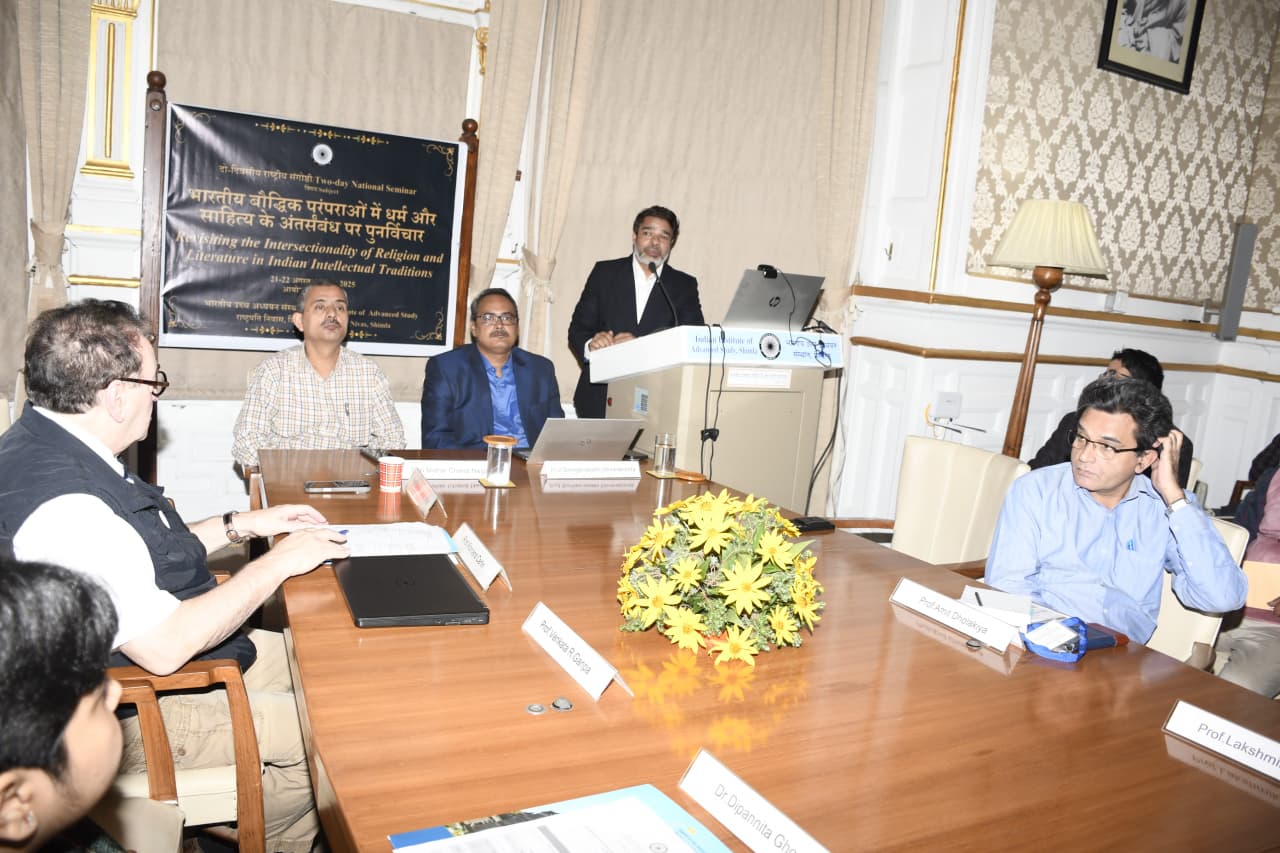 Prof. Sanjeev Kumar H.M., in his thematic introduction, highlighted that religion in India functions not just as doctrine but as a lived cultural reality, deeply embedded in literary forms. He advocated for scholarly approaches that reflect this interwoven cultural and philosophical heritage.
Delivering the keynote address virtually, Prof. Siddharth Singh, Vice-Chancellor of Nava Nalanda Mahavihara, traced the evolution of Indian religious literature from ancient Buddhist and Brahmanical texts to contemporary interpretations. He emphasized the dual role of sacred narratives in fostering individual enlightenment and societal harmony.
Prof. Shashiprabha Kumar, Chairperson of IIAS and former Vice-Chancellor of Sanchi University, in her presidential address, asserted that Indian philosophy transcends the secular-sacred binary dominant in Western thought. She underlined how the dharmic worldview seamlessly integrates metaphysical inquiry with literary expression.
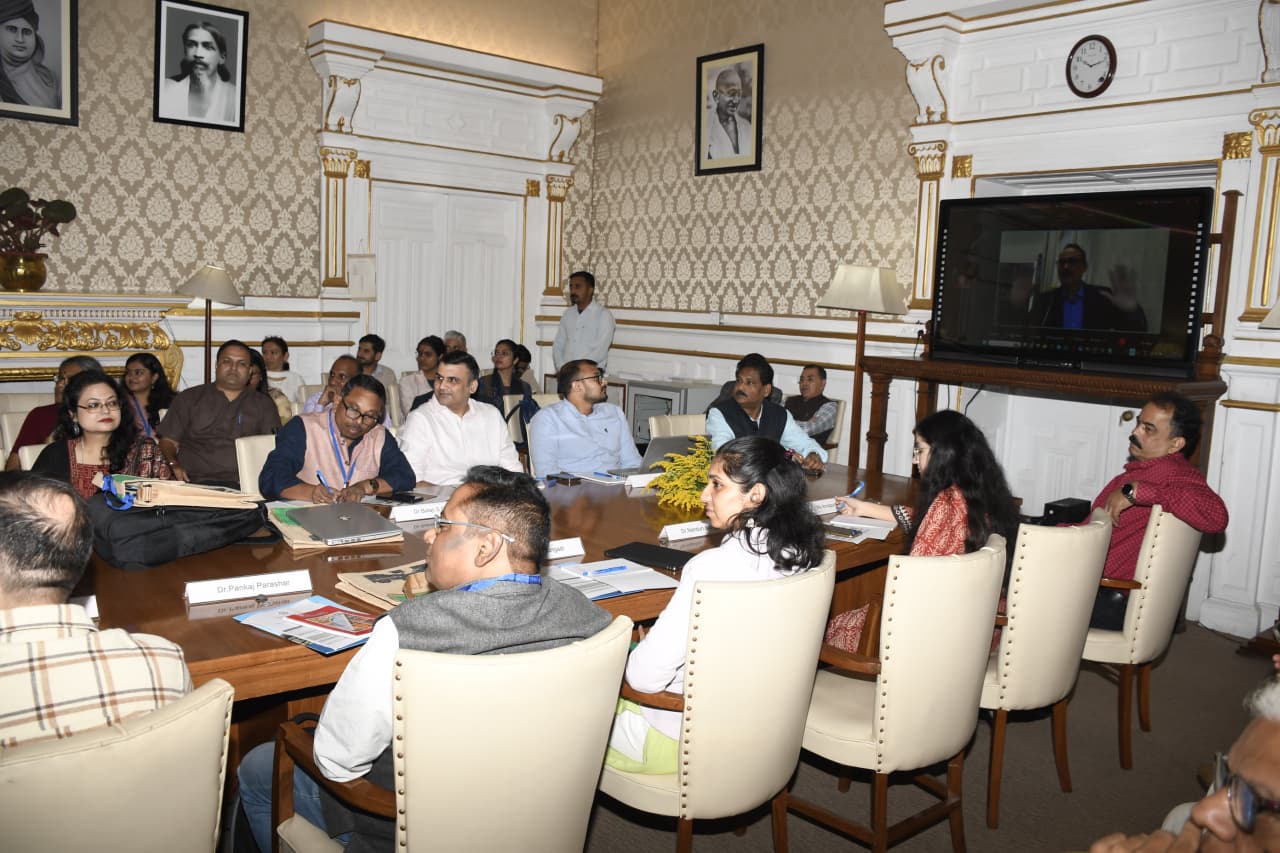 The session concluded with a vote of thanks by Mehar Chand Negi, Secretary of IIAS, followed by the National Anthem and a group photograph. The proceedings were moderated by Akhilesh Pathak, PRO of IIAS. A tea break marked the close of the opening ceremony.
Subsequent academic sessions delved into themes such as Bhakti literature, epic reinterpretation, regional aesthetics, and decolonial textual approaches, continuing the rich dialogue initiated during the inaugural session.
Nurturing Creativity – Keekli Charitable Trust, Shimla