
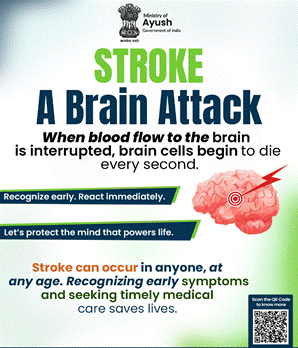
 On the occasion of World Stroke Day 2025, the Ministry of Ayush underscored the vital role of Ayush systems in offering holistic, preventive, and rehabilitative care for stroke — a major cause of mortality and disability in India. The Ministry highlighted that Ayush approaches can effectively complement conventional medical care by promoting systemic balance, resilience, and long-term recovery.
Union Minister of State (Independent Charge) for Ayush and Minister of State for Health & Family Welfare, Prataprao Jadhav, stated that the increasing burden of stroke demands integrative health strategies combining modern medicine with traditional systems. “Ayush systems, with their focus on prevention and rehabilitation, can substantially enhance stroke management. The Ministry is committed to advancing evidence-based traditional healthcare, expanding research collaborations, and raising public awareness to reduce stroke incidence and improve recovery outcomes,” he said.
Vaidya Rajesh Kotecha, Secretary, Ministry of Ayush, added that Ayush systems provide a holistic framework for addressing complex neurological disorders such as stroke. He emphasised that the Ministry continues to promote collaborative and translational research to validate and expand the therapeutic scope of Ayush-based interventions, thereby strengthening integrative healthcare for neurological well-being and rehabilitation.
The Ayush philosophy centres on achieving harmony between the body, mind, and environment. Its preventive and restorative practices focus not only on disease management but also on enhancing vitality, reducing recurrence, and improving quality of life.
In Ayurveda, stroke (understood as a Vata imbalance) is managed through therapies that restore balance, improve circulation, and rejuvenate the nervous system. Similarly, Homoeopathy has shown promise as an adjunct therapy in improving neurological and motor recovery post-stroke.
The Ministry reaffirmed that integrating Ayush systems with modern medical approaches can play a transformative role in preventing and managing strokes, ensuring comprehensive and sustainable health outcomes for individuals and communities alike.


Nurturing Creativity – Keekli Charitable Trust, Shimla