
 A new scientific study has found that even remote Himalayan regions once considered clean are now experiencing measurable air pollution, indicating a clear shift in air quality and raising concerns about long-term environmental and health impacts.
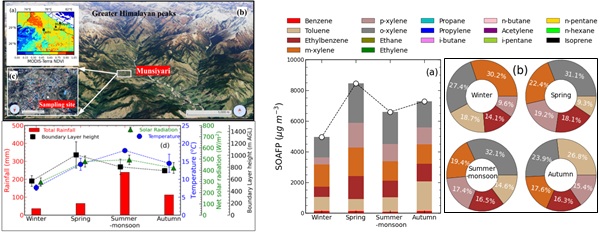
Researchers from the Aryabhatta Research Institute of Observational Sciences (ARIES), an autonomous institute under the Department of Science and Technology (DST), monitored air quality for one year (2022–2023) in Munsyari, a high-altitude tourist location in the Himalayas, to study non-methane hydrocarbons (NMHCs).
NMHCs are reactive gases released from fuel combustion, vehicles and other human activities, which contribute to the formation of ozone and secondary aerosols—both harmful to air quality and human health.
The study found clear seasonal variation, with lower pollution levels during winter and monsoon, while significantly higher concentrations were recorded in spring and autumn. Researchers identified fuel use (LPG and diesel), vehicular emissions and construction activities as major local sources affecting air quality in the region.
They also observed that aromatic hydrocarbons such as benzene and xylene contribute strongly to secondary pollutant formation, including ozone, which has implications for both climate and human health.
A regional comparison showed that NMHC levels in Munsyari are higher than those in other high-altitude areas like Nainital, though still lower than urban centres such as Haldwani and Delhi.
The findings suggest that pollution is gradually reaching even sensitive Himalayan ecosystems due to both local activities and regional transport of pollutants. While immediate health risks remain limited, researchers warned that long-term exposure—particularly to benzene—could pose cancer risks above safety thresholds.
The study underscores the need for continuous monitoring and targeted mitigation strategies to protect fragile mountain environments from worsening air pollution.

Nurturing Creativity – Keekli Charitable Trust, Shimla