Rajeev Khanna, Solan
An Entry In My Diary
It is February 18, 2006 today. I had met her a couple of months back. Looking back at my encounter with her, all I can say is that she epitomizes the Gujarat that has never been reported and perhaps will never be reported.
The politicians, the middle class, and the upper-caste dominated media will also never allow anyone to highlight her. She will just die as she has lived—in anonymity, a victim of atrocities and a person who carries the stigma of her clan, which bears the name of Dafer—a denotified criminal tribe.
I am a part of the same media that had been ignoring her for decades. Yet, she had smiled on seeing me—an old dame wearing the finery which only the poor can afford (the rich just pick up monotonous, well-defined apparel from shopping malls).
Yes, I forgot to tell you her name because names really don’t matter. Or do they? Still, I will tell you that her name was Sakina, an old, sturdy dame in her late sixties.
She is a representative of her Dafer clan—a clan which the police, media, and hence the middle class have always associated with small-time crime. I had asked about her place of residence, and she had said with a smile that she came from a village near Vijapur in North Gujarat.
What had been her biggest problem in life? “I am not allowed to fetch water from the community sources in the village. I always have to wait till the others have finished filling their buckets and utensils. Because we are Dafers and we work as guards in the fields belonging to the prosperous people, our huts are always outside the village. After the day’s labor, when I go to fetch water, I am not allowed to do so. Where does a Dafer have a chance of getting water in a village of 150 families? Eventually, when I manage to get a little bit of it, the choice of utilization becomes a priority. We have to think whether we can afford the luxury of washing or taking a bath,” she said, while underlining the fact that she doesn’t understand what facilities mean.
My next query was about her tribe still bearing the tag of a denotified criminal tribe. I wanted to know what, according to her, was the present-day reality.
She replied, “We are accused of crimes committed by others. Our children are picked up by the police, who extract confessions after giving them a good beating. Do you expect a child to keep on receiving blows? He is declared an accused whether he says yes or whether he says no. So the strategy is to flee once a cop is seen. Women and children flee after gathering a few belongings if they can, only to return after some time. It is a cat-and-mouse game that goes on throughout our lives.”
Her accomplice, by the name of Ibrahim, had told me that Dafers have given up indulging in small-time crime over the years. He had posed an interesting question: “Criminals have no community of their own, and today, can you name any community where there is no criminal?”
I had met Sakina at an event announcing a meet on marginalized societies. The next time I came across her at the meet, she approached me with a smile and wished me well. I asked about her well-being, and she replied, “Till the time I am alive, even if on the margins, I will strive to get my right to an equal share of water.”
(Rajeev Khanna is a veteran journalist with over thirty years of experience across print, broadcast and digital media. He has worked with leading media organisations, including BBC, Asian Age, Indian Express, Times of India and Tribune, and has contributed to digital platforms such as The Citizen, The Wire, Scroll, National Herald and Down To Earth. An avid reader since his student days in Solan and Shimla, he maintains a deep interest in literature and occasionally ventures into fiction writing. His other passions include cinema, music, travel and sports, reflecting his wide-ranging intellectual and cultural interests.)
Sponsored

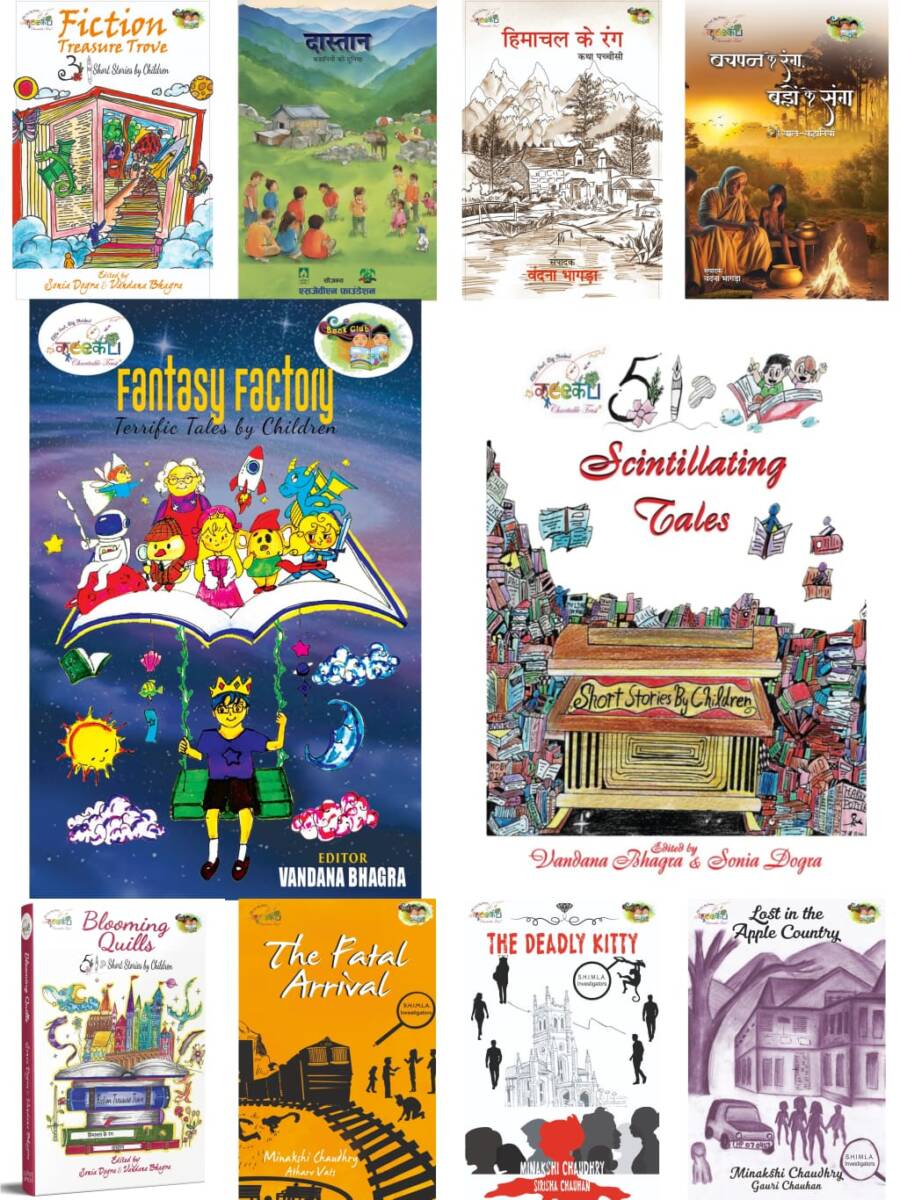
Nurturing Creativity – Keekli Charitable Trust, Shimla