
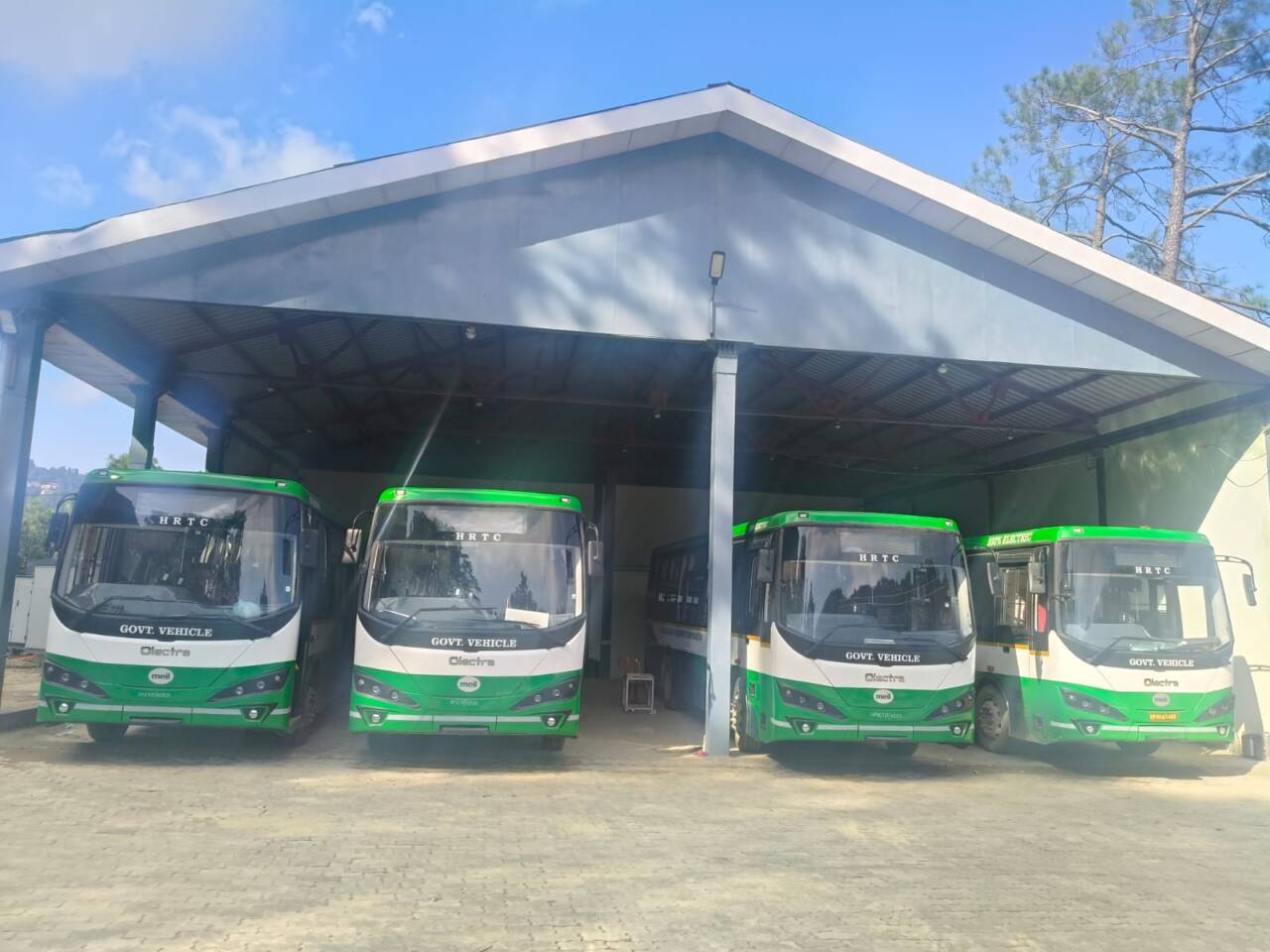
 The project is progressing in phases, with 34 charging stations already operational and another 21 scheduled for completion within the next month. Work on the remaining 25 locations is currently underway. These stations directly support HRTC’s active fleet of 297 electric buses operating on both short- and long-distance routes. Transitioning away from conventional fuel has already yielded substantial financial benefits, cutting operational costs by roughly ₹15 to ₹16 per kilometer compared to diesel expenses.
The state’s e-bus fleet is also exceeding standard performance expectations. While typical electric buses cover around 180 kilometers per charge, HRTC has successfully run single-charge trips on the 270-kilometer Haroli–Chandigarh route. Furthermore, buses on the 250-kilometer Shimla–Chandigarh round-trip complete the entire journey with nearly 25 percent battery capacity remaining, proving the viability of long-haul electric transit across the region.
राष्ट्रगान विवाद, सीएम सुक्खू से माफी की मांग पर अड़ा विपक्ष


Nurturing Creativity – Keekli Charitable Trust, Shimla