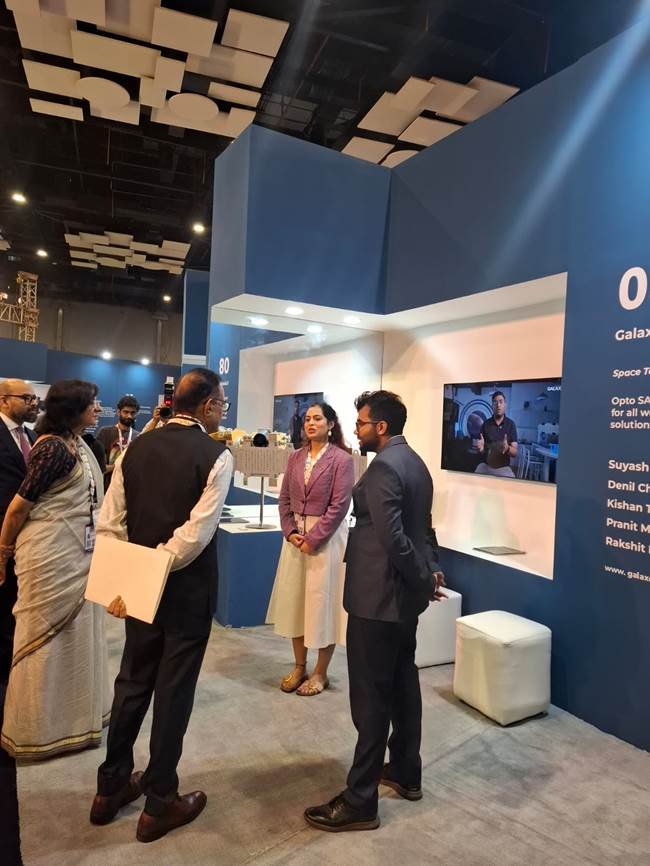
 The Union Ministry of Education, in partnership with the Ministry of External Affairs, is hosting the BRICS Bharat Innovates (BBI) Exposition on September 11–12, 2026, at Bharat Mandapam, New Delhi. Organized as a prelude to and alongside the 18th BRICS Summit under India’s Chairship, the showcase spotlights the nation’s cutting-edge deep-tech advancements. Themed “Building for Resilience, Innovation, Cooperation and Sustainability,” the event features high-profile visits from Prime Minister Narendra Modi, Union Education Minister Pralhad Joshi, foreign Heads of Delegation, and top global business leaders.
The initiative acts as a international accelerator designed to bridge India’s higher education ecosystem—including top universities, research parks, and laboratories—with global investors, corporations, and governments. Coinciding with the BRICS Business Forum, this New Delhi edition brings together 37 select Indian deep-tech ventures drawn from an elite cohort of 120 startups. Supported by major industry bodies like FICCI, CII, and ASSOCHAM, the platform offers participating innovators direct access to B2B matchmaking, venture investments, and international market expansion, directly advancing the BRICS Education Track goal to strengthen research and startup networks.
This event marks the second major international showcase for the initiative in 2026, following its inaugural edition held in Nice, France, under the India–France Year of Innovation. Jointly opened by Prime Minister Modi and French President Emmanuel Macron, the June event featured 120 deep-tech startups and 15 premier institutes, attracting over 2,000 global participants. That debut resulted in more than 30 collaborative MoUs, 1,350 business meetings, and over $254.5 million in secured funding commitments for Indian innovators.
The exposition also builds upon recent ministerial momentum under India’s 2026 Chairship. In August 2026, the Ministry of Education hosted the 13th BRICS Education Ministers’ Meeting in Bhubaneswar, Odisha, which concluded with a landmark joint declaration. That agreement outlined strategic alignment across five key priority areas: early childhood and foundational literacy, skill development and TVET, startup and research ecosystems, mutual recognition of qualifications, and academic leadership capacity building.
Sponsored
Nurturing Creativity – Keekli Charitable Trust, Shimla