 Lakshmi Rameshwar Rao
From 1858 through to 1948, the British occupied and controlled India. During its years in India, Britain had a profound influence on Indian architecture. Britain was forced to release its grip on India, but the mark on India’s architecture remains.
The Victoria Memorial is a large marble building in Kolkata, West Bengal, built between 1906 and 1921. Dedicated to the memory of Queen Victoria (1819–1901), it is now a museum and tourist attraction.
The Writers’ Building is the secretariat building of the State Government of West Bengal, India. Designed by Thomas Lyon in 1777, the Writers’ Building has had several extensions. The “Minerva statue” is the most attractive of the statues. It is the largest and stands in the center of the building. There are also other idols like Zeus, Hermes, Athena, and Demeter. There are four clusters of statues, christened ‘Justice’, ‘Commerce’, ‘Science’, and ‘Agriculture’. Built with red brick, it is 150 meters long and covers an area of 550,000 square feet.
Lutyens’ Delhi is an area in New Delhi, India, called after the British architect Sir Edwin Lutyens (1869–1944), who was responsible for much of the architectural design and building during the period of the British Raj, when India was part of the Raj. Sir Edwin Lutyens, the architect, designed 4 bungalows in the Rashtrapati Bhavan Estate. Apart from designing the Viceroy’s House, Lutyens designed large government buildings and was involved with town planning.
Lutyens led a group of architects in laying out the central administrative area of the city, with the charge of retaining one-third of the area as green space. Sir Herbert Baker, one of the group, designed the Secretariat Buildings (North and South Block) and the bungalows. Baker also designed Parliament House (also known as Sansad Bhavan), located on Sansad Marg. At the heart of the city is the impressive Rashtrapati Bhavan (formerly known as Viceroy’s House), located on the top of Raisina Hill.
Art
Raja Ravi Varma was an Indian painter and artist, considered one of the greatest painters in the history of Indian art. He accomplished a union of Indian tradition with the techniques of European academic art.
Raja Ravi Varma is known for his paintings, which revolve mainly around the Puranas (ancient mythological stories) and the Indian epics – Mahabharata and Ramayana. His portrayal of Hindu gods and goddesses went on to become worship pictures for many people, especially those belonging to the lower castes. At that time, the lower castes were forbidden from entering temples, and so they celebrated Varma’s works, which gave them an idea of how the deities looked inside the temple.
Varma received wide acclaim after he won an award for an exhibition of his paintings at Vienna in 1873. Varma’s paintings were also sent to the World’s Columbian Exposition held in Chicago in 1893, where he was awarded three gold medals.
Ravi Varma started a lithographic printing press. The Ravi Varma Press was the largest and one of the most innovative presses in India at that time. The press was managed by his brother, but it was a commercial failure.
In 1901, the press was sold to his printing technician from Germany, Fritz Schleicher. The press continued to run until a devastating fire in 1972 destroyed the whole factory. Many of Ravi Varma’s original lithographic prints were lost in the fire.
Abanindranath Tagore
The nephew of Rabindranath Tagore, Abanindranath, was one of the most prominent artists of India. Abanindranath first created the ‘Indian Society of Oriental Art’ and later went on to establish the Bengal School of Art. His sole aim for establishing the school was to counter the English influence on Indian artists. He was the first major supporter of Swadeshi values in Indian art.
Abanindranath was a proficient and accomplished writer. Most of his literary works were meant for children. Some of his books like ‘Budo Angla’, ‘Khirer Putul’, and ‘Rajkahini’ are the best examples of Bengali children’s literature. He tried to create a new national style of art using different Indian techniques, including Mughal and Rajput, together with Japanese and Chinese methods.
Nandalal Bose
Nandalal Bose (1882–1966) was one of the pioneers of modern Indian art. A pupil of Abanindranath Tagore’s, Bose was known for his “Indian style” of painting. He was influenced by the Tagore family and by the murals of Ajanta. His classic works include paintings of scenes from Indian mythologies, women, and village life. Many critics consider his paintings among India’s most important modern paintings.
The Archaeological Survey of India, Department of Culture, declared him among the “nine artists” whose work, “not being antiquities”, were to be henceforth considered “to be art treasures, having regard to their artistic and aesthetic value.” He became the principal of Kala Bhavan, Santiniketan, in 1921. He was honored with the Padma Vibhushan in 1954. In 1956, he was elected Fellow of the Lalit Kala Akademi. He was the second artist to be so honored by the National Academy of Art. Visva-Bharati University conferred on him the title ‘Deshikottama’. The Academy of Fine Arts honored him with the Silver Jubilee Medal. In 1965, the Asiatic Society of Bengal honored him with the prestigious Tagore Birth Centenary Medal.
Jamini Roy
Jamini Roy (1887–1972) was sixteen when he was sent to study at the Government College of Art, Kolkata. Abanindranath Tagore, the founder of the Bengal School, was vice-principal. He was taught to paint in the prevailing academic tradition, drawing classical nudes and painting in oils. In 1908, he received his Diploma in Fine Art.
Roy began his career as a commissioned portrait painter. Somewhat abruptly in the early 1920s, he gave up commissioned portrait painting in an effort to discover his own. He featured a new style based on Bengali folk traditions. Roy was described as an art machine because he produced 20,000 paintings in his lifetime, which is about 10 paintings daily, but made sure his artistic aims remained the same. He always targeted the ordinary middle class as the upholder of art; however, he was thronged by the rich.
Jamini Roy died in 1972. In 1934, he received the Viceroy’s gold medal in an all-India exhibition for one of his works. In 1955, he was awarded the Padma Bhushan, the third-highest Indian civilian award. In 1956, he was made the second Fellow of the Lalit Kala Akademi, the highest honour in the fine arts conferred by the Lalit Kala Akademi.
Amrita Sher-Gil
Sher-Gil was born in Budapest in 1913. Her mother, Marie Antoinette Gottesmann, was a Hungarian-Jewish opera singer, and her father, Umrao Singh Sher-Gil Majithia, a Sikh aristocrat and a scholar of Persian and Sanskrit. By the time she was five, Amrita had started painting. She began taking formal art lessons at age 8, when her family moved to Summer Hill, Shimla, in north India. In Shimla, the nine-year-old Amrita started learning piano and also acted in plays along with her sister at the famous Gaiety Theatre.
At 16, she moved to Paris and continued studying art, first at the Académie de la Grande Chaumière and later at the École des Beaux-Arts. She had early success. Her 1932 painting “Young Girls” received a gold medal in 1933 at the Paris Salon, the renowned art show.
Amrita Sher-Gil’s paintings reflect the different aspects of her personality — outgoing and sociable, as she was known among those who encountered her at Parisian parties, or tucked away and painting vigorously.
Amrita Sher-Gil created self-portraits that showed her “grappling with her own identity”. She has been called “one of the greatest avant-garde women artists of the early 20th century” and a pioneer in modern Indian art. Blending traditional and Western art forms, Amrita Sher-Gil was one of the most famous Indian painters. She is also considered a revolutionary woman artist and the originator of modern art in India.
Amrita Sher-Gil died in 1941 at the age of twenty-nine and is buried in Lahore. One of her biographers, Yashodhara Dalmia, wrote in “Amrita Sher-Gil: A Life” (2006) that the paintings often reflected an introverted and troubled woman caught between her Hungarian and Indian existences.
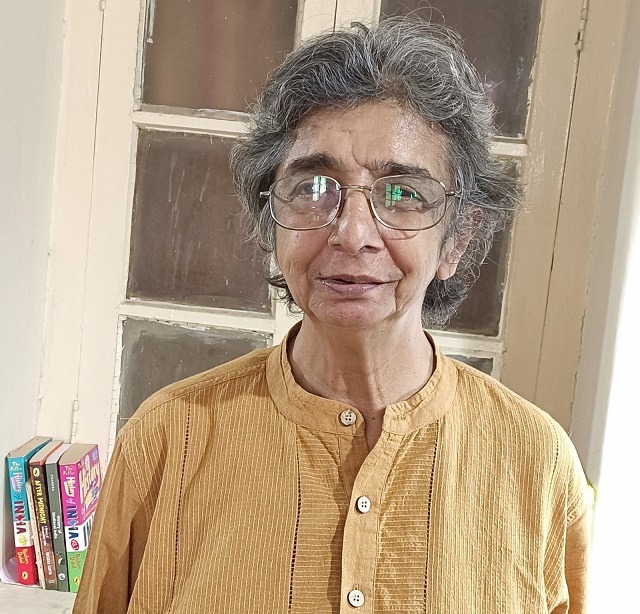
(The writer has a Masters in Adult Education from Jamia Milia Islamia. She has many years teaching experience at the school level as also ten years of experience in book publishing and some published writing in newspapers and more students’ books. Lakshmi has retired and lives in Hyderabad.)
The Revolt of 1857: India’s First Freedom Struggle – Feature
Sponsored
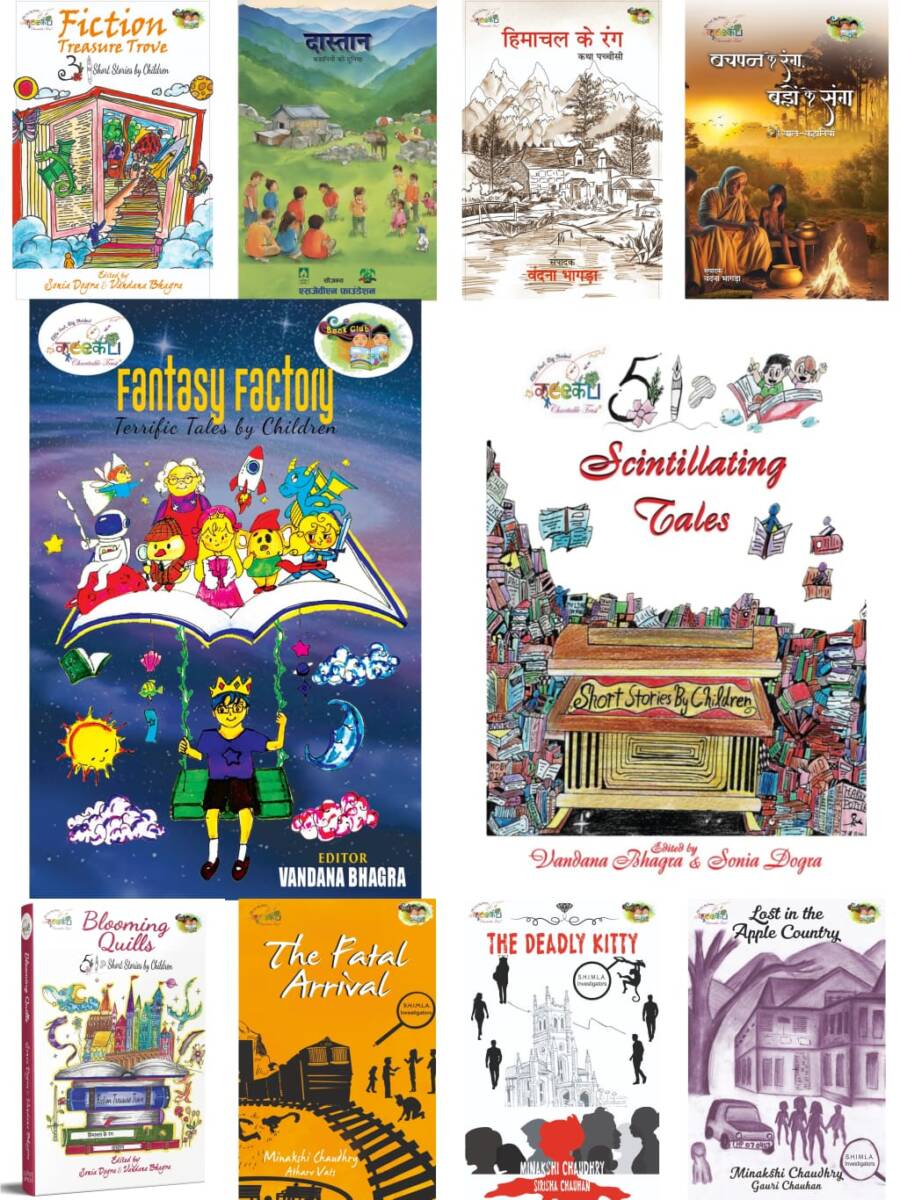
Nurturing Creativity – Keekli Charitable Trust, Shimla