
Sanitary waste management remains a major challenge across India, with improper disposal leading to environmental and health hazards. However, Karad, a small city in Maharashtra’s Satara district, has emerged as a role model in tackling this issue. With 100% segregation, collection, and processing of sanitary and biomedical waste, Karad has set a benchmark for effective and sustainable waste management.
Ensuring the proper disposal of sanitary waste—such as sanitary napkins, diapers, and other hygiene products—has helped prevent health risks, environmental harm, and social stigma in Karad. In Karad, approximately 300 to 350 kg of sanitary waste is collect daily from hospitals, clinics, households, and other facilities. One of the key steps taken by the administration was to break the taboo surrounding sanitary waste.
This involved raising awareness and educating the community about the importance of proper sanitary waste management and the potential health risks associated with improper disposal.The city has adopted innovative strategies to educate residents on waste segregation via initiatives like workshops, community outreach programs, and public service announcements which played a key role in promoting responsible waste segregation and disposal.
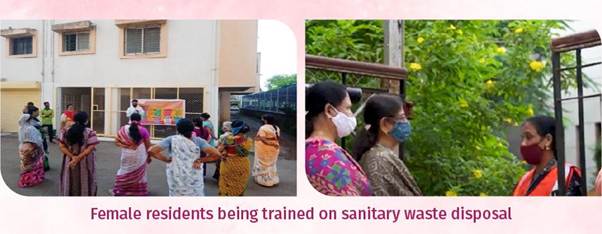
Karad Municipal Council (KMC) collaborated with female residents, leading to the formation of women groups that played a pivotal role in raising awareness on proper sanitary waste disposal and segregation in the residential areas. To facilitate this, separate red bins installed in public toilets across the city, making it easier for women to dispose of sanitary waste responsibly.
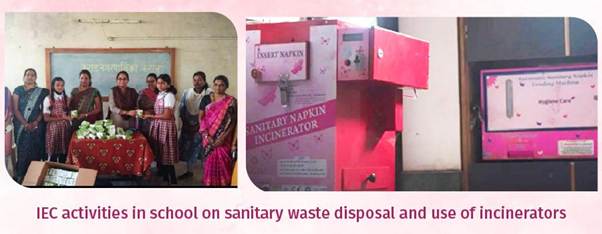
Schools are also encouraged to install sanitary pad vend machines and disposal systems. Additionally, the city’s IEC team promote hygienic disposal practices, such as wrapping used sanitary pads in paper before discarding them. This initiative has led many schools to install incinerators, ensuring proper processing of sanitary waste, with the remaining residue sent to the biomedical waste treatment plant.
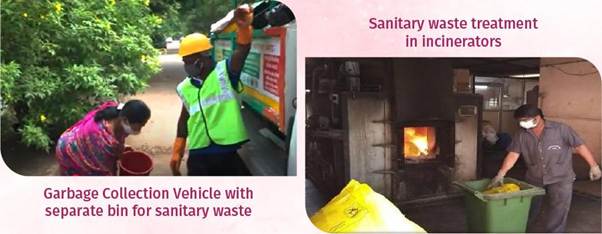
The Garbage Collection Vehicle in the city carries a separate bin for collection of sanitary waste. Ensure proper disposal, sanitation staff collect this waste separate, allow only suitable materials to be incinerate.
The sorted waste is then process at a high-temperature incinerator, operate by the Karad Hospital Association, where it is burn at high temperatures. During incineration, organic materials are oxidize, generating heat, gas, and ash.
To minimize environmental impact, the gases produce are filter to remove harmful substances. The facility’s emissions are continuously monitor to meet air quality standards, with real-time data linked to the State Pollution Control Board (SPCB) monitoring system for regulatory oversight.
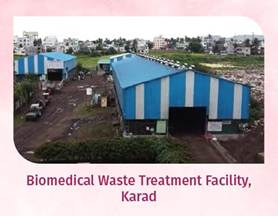
To enhance sanitary waste disposal, the Karad Municipal Council (MC) has partnered with the Karad Hospital Association for the treatment of sanitary and biomedical waste. Under this agreement, KMC has allocated land for the construction of a biomedical waste treatment plant, which the hospital association is responsible for operating and maintaining.
As part of the arrangement, the hospital association established the 600 kg/day Common Biomedical Waste Treatment Facility (CBWTF) where the sanitary waste collected by the municipal council free of charge is processed.
All sanitary waste in the city is incinerated at this facility, which houses a centralized incinerator capable of reaching temperatures up to 1200°C. This high-temperature incineration effectively minimizes contamination risks and health hazards, ensuring a safer working environment for sanitation staff.
The improved sanitary waste management system in Karad City has had a significant positive impact on both public health and environmental sustainability. The agreement with the Karad Hospital Association has notably reduced the financial burden on the Karad Municipal Council, as it only bears the cost of waste collection and transportation. This partnership highlights the effectiveness of the Public-Private Partnership (PPP) model in solid waste management.
The high-temperature incineration of sanitary waste has greatly minimized health risks and contamination, particularly safeguarding sanitation workers who handle the waste. By eliminating the open dumping of sanitary waste, the city has also prevented environmental degradation and curbed the spread of diseases.
By implementing proper waste segregation, increasing awareness, and developing more effective infrastructure, Karad prevented the public health and environmental hazards posed by inadequate sanitary waste management.
This is not only contributed to the city’s cleanliness but also helped to improve the quality of life for the residents, particularly women, who are most directly affected by the challenges surrounding sanitary waste disposal.


Nurturing Creativity – Keekli Charitable Trust, Shimla