
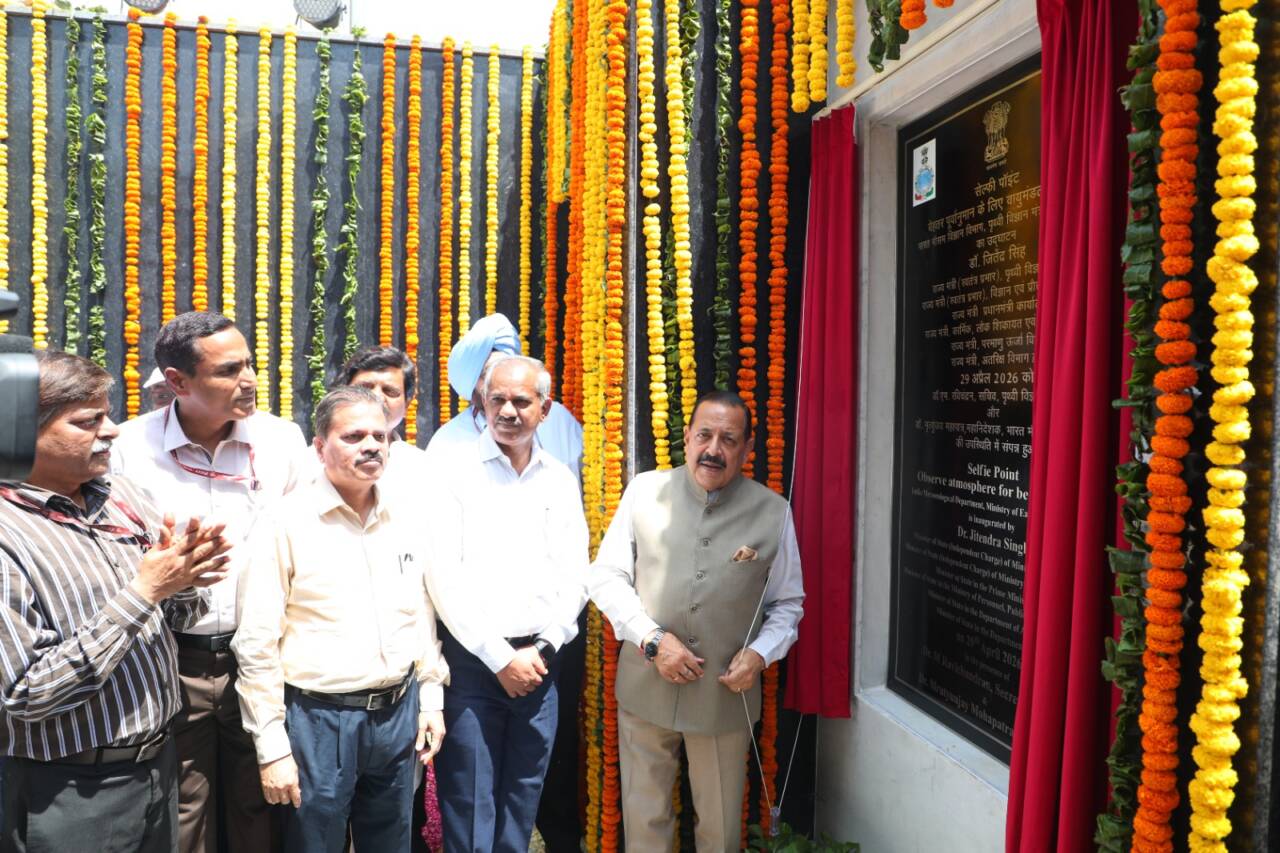
 India has witnessed a major boost in its weather forecasting capabilities with a sharp expansion of its Doppler Weather Radar (DWR) network, which has grown from 14 units in 2014 to 50 operational radars today, marking an increase of more than 250%, according to Union Minister Dr. Jitendra Singh.
He stated that the expanded network now covers over 87% of the country, significantly improving the ability to forecast cyclones, heavy rainfall, and thunderstorms under the India Meteorological Department (IMD). An additional 50 radars are also planned under the government’s Mission Mausam initiative to further strengthen climate monitoring infrastructure.
Dr. Singh shared this information after inaugurating a “Selfie Point” showcasing weather radar technology at the IMD headquarters in New Delhi. The event was attended by senior officials including Dr. M. Ravichandran and Dr. Mrutyunjay Mohapatra.
He highlighted that India’s meteorological services have undergone a dramatic transformation over the past decade, moving from uncertain forecasts to highly accurate, technology-driven predictions now widely used by farmers, travellers, aviation experts, and citizens in daily life.
The minister also emphasized the growing importance of “Nowcast” services, which provide hyper-local weather updates for the next three hours, helping improve disaster preparedness and real-time decision-making. He noted that modern forecasting systems can now even estimate rainfall intensity, precipitation type, and storm characteristics with greater precision.
The Doppler radar technology, powered by advanced dual-polarization systems, allows scientists to detect and analyse weather systems more accurately while reducing false alarms. These improvements have strengthened early warning systems for extreme events and enhanced support for sectors like agriculture, aviation, and disaster management.
Dr. Singh further said that India’s improved forecasting capacity is also benefiting neighbouring countries, reflecting the nation’s growing role in regional climate cooperation.
The newly inaugurated display at IMD aims to raise public awareness about weather science and encourage citizens to use official forecasting tools through mobile apps, alerts, and digital platforms, bridging the gap between scientific advancement and everyday life.

Daily News Bulletin
Nurturing Creativity – Keekli Charitable Trust, Shimla