
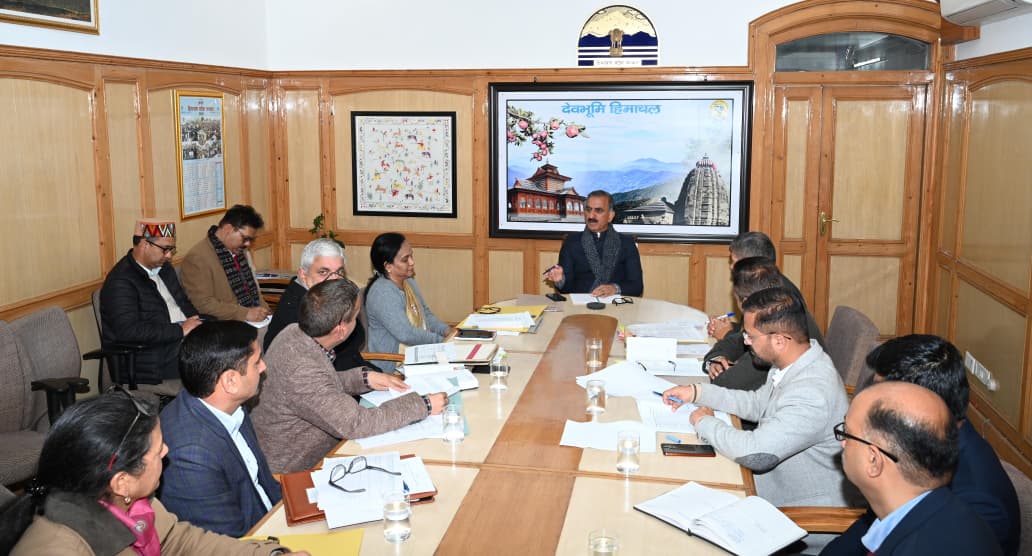
 CM Sukhu on Tuesday directed the Health Department to accelerate efforts to strengthen medical services and infrastructure across Himachal Pradesh, reiterating that healthcare remains a top priority of the State Government.
Presiding over a review meeting, the Chief Minister said that from April onwards, world-class, technology-enabled medical equipment would be procured for government health institutions, involving an investment of around ₹3,000 crore. He added that the government was enhancing diagnostic services while addressing shortages of doctors and paramedical staff. Recruitment to fill vacant posts is already underway, and additional posts will be created wherever required.
Sukhu announced that PET scan and robotic surgery facilities would soon be introduced at IGMC Shimla. Robotic surgery services are already functional at Super Specialty Hospital Chamiyana and Dr. RPGMC Tanda. He also said that the ‘Aadarsh Swasthya Sansthan’ initiative was being strengthened to ensure quality healthcare services closer to people’s homes.
To prevent disruption in healthcare services due to doctors proceeding on postgraduate courses, the Chief Minister directed the creation of a training and leave reserve quota of 300 doctors in the Department of Health Services, enabling timely replacement of vacancies. He further instructed that medical colleges should limit class strength to a maximum of 60 students, with smaller batches to improve the quality of education. The State Government will support the construction of new lecture theatres and the upgradation of facilities in all medical colleges.
Emphasizing equitable healthcare access, the Chief Minister said the government’s focus was on strengthening services in remote and rural areas so that patients are not forced to travel long distances for advanced treatment. He noted that modern equipment, adequate manpower, and improved diagnostics would significantly enhance patient outcomes and the working environment for healthcare professionals.
He directed the Health Department to ensure timely implementation of all initiatives so that the benefits reach the public at the earliest, adding that improving medical education and infrastructure was essential for building a strong and sustainable healthcare system in the long run.


Daily News Bulletin
Nurturing Creativity – Keekli Charitable Trust, Shimla