
 PIB Delhi – Water Quality in the lower stretches of the River Ganga was found to be in an alarming situation by a team of scientists who developed the much-needed baseline of Water Quality Index (WQI) of the place. They reported a continuous deterioration of water quality. Rapid human pressure and anthropogenic activities has resulted in release of untreated municipal and industrial sewages along with other forms of pollutants in the River Ganga. In particular, the lower stretches of the River Ganga, close to the megapolis Kolkata, are heavily influenced by anthropogenic factors, mainly due to intense population pressure on both sides of the river banks.
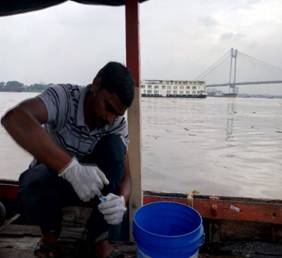
 As a result, there has been marked increase in discharge of untreated municipal and industrial sewages in the lower stretch of River Ganges with consequences for many unique and biodiversity ecosystems such as the Sundarbans mangrove and endangered charismatic species such as the Gangetic Dolphin. The team led by Professor Punyasloke Bhadury from the Integrative Taxonomy and Microbial Ecology Research Group (cccc) at IISER Kolkata monitored nine sites encompassing 59 stations along 50 kms stretch of the lower stretches of the River Ganga over two years to understand the dynamics of key environmental variables including forms of dissolved nitrogen along with biological proxies to assess the state of health of Ganga. The scientists have come up with the WQI of the place, a key metrics that helps understand the health and ecological consequences for the lower stretch of River Ganga.
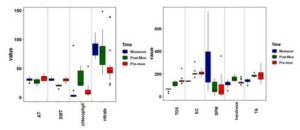
Department of Science and Technology (DST)- Water Technology Initiative has supported the group to undertake this key study which has been published in the journal ‘Environment Research Communications’ recently. Their study has shown that WQI values of this stretch of the River was between 14–52 and was continuously deteriorating irrespective of the season of sampling. They have also identified the point source along with type of pollutants, in particular forms of nitrogen with effect on biota along the 50 km stretch that required immediate intervention for effective river basin management. The findings from this study will be pivotal for long-term ecological health monitoring of the lower stretch of River Ganga, along with the integration of sensors and automation.


Nurturing Creativity – Keekli Charitable Trust, Shimla