
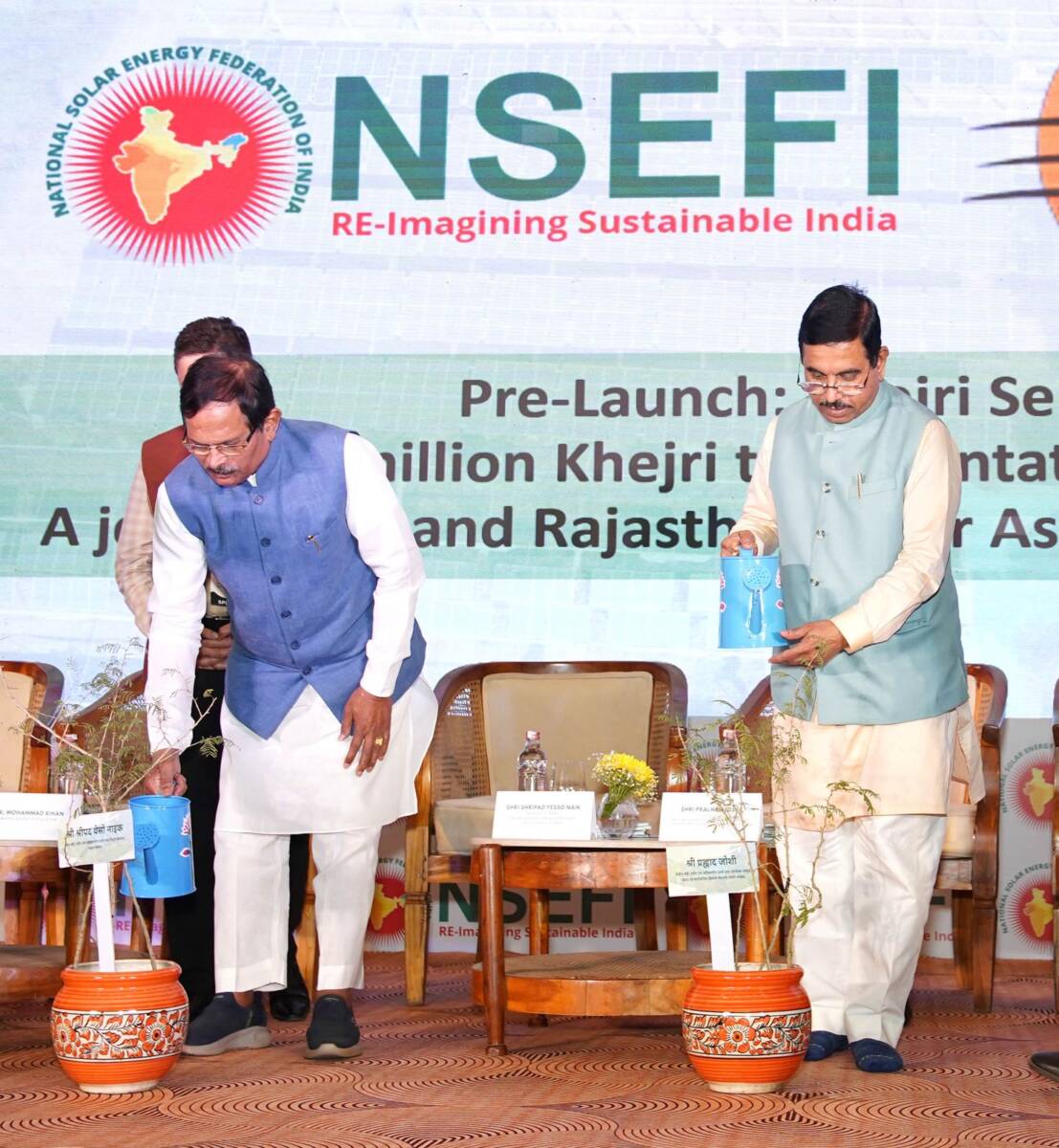
 Union Minister for New and Renewable Energy Pralhad Joshi said that renewable energy is playing a crucial role in strengthening India’s rural economy by providing reliable electricity to farmers, improving productivity and reducing irrigation costs. Addressing the 4th National Agro‑RE Summit in New Delhi, he stated that the growing use of solar power in farms and households is not only driving the energy transition but also transforming rural livelihoods. He highlighted that solar-powered irrigation pumps are helping farmers reduce dependence on diesel and enabling access to affordable daytime irrigation, leading to significant savings in cultivation costs.
The Minister said that under the PM‑KUSUM scheme, more than 10 lakh standalone solar pumps have already been installed across the country, while over 13 lakh grid-connected agricultural pumps have been solarised. These initiatives are enabling farmers to become “Urjadaata” (energy providers) along with being “Annadata” (food providers). He also informed that the government is preparing PM-KUSUM 2.0, which will include a dedicated 10-GW Agri-PV component to promote agrivoltaics, allowing farmers to generate solar power while continuing cultivation on the same land.
Highlighting the potential of agrivoltaics, the Minister said combining solar power generation with farming could significantly increase land productivity and farmers’ incomes. According to estimates, India’s agrivoltaic potential could range from 3,000 GW to nearly 14,000 GW. Studies suggest that farmers’ annual income could rise from around ₹60,000 per acre to over ₹1 lakh per acre when electricity generation is combined with crop production.
Joshi also mentioned the progress of the PM Surya Ghar: Muft Bijli Yojana, under which more than 31 lakh households have installed rooftop solar systems to generate their own electricity and reduce power bills. He noted that India’s non-fossil fuel power capacity has increased significantly from about 81 GW in 2014 to nearly 275 GW today, with solar capacity expanding rapidly.
Speaking on the occasion, Union Minister of State for Power and New & Renewable Energy Shripad Yesso Naik said agrivoltaic systems could play a transformative role in India’s clean energy transition by enabling simultaneous crop cultivation and solar power generation on the same land. He emphasised the need for stronger collaboration among government agencies, industry, research institutions and financial organisations to expand the adoption of agrivoltaic technologies and make them more accessible to farmers.
The summit, organised by the National Solar Energy Federation of India in collaboration with the India Agrivoltaics Alliance, brought together policymakers, industry leaders, farmers and renewable energy stakeholders to discuss ways to integrate renewable energy with agriculture and support India’s goal of achieving 500 GW non-fossil fuel capacity.


Daily News Bulletin
Nurturing Creativity – Keekli Charitable Trust, Shimla