
 The Himachal Pradesh government has intensified its push toward renewable energy, generating over 2,534 million units of electricity from major projects and earning more than ₹1,004 crore in revenue. Under the leadership of Chief Minister Sukhvinder Singh Sukhu, the state is expanding hydropower, solar energy and emerging green technologies to strengthen its position as a leading clean energy hub.
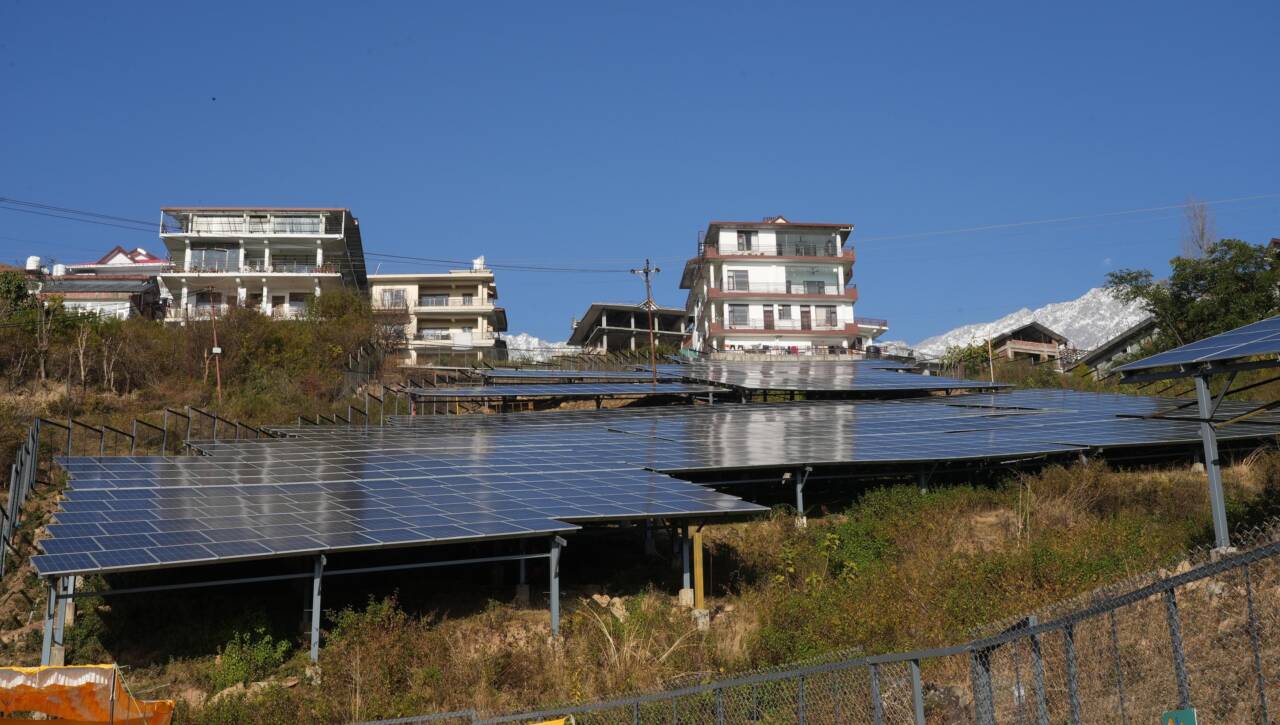
The government has set a target of installing 500 MW of solar capacity within two years. Solar projects in Una district and Bilaspur district—including Pekhubela, Bhanjal, Aghlor and Baira Dol—have a combined capacity of 52 MW and have produced about 114.27 million units of electricity, generating ₹34.83 crore in revenue.
Hydropower remains the backbone of the state’s renewable energy sector. Major projects such as the 100 MW Sainj Hydroelectric Project in Kullu district, the 65 MW Kashang Stage-I Project in Kinnaur district and the 111 MW Sawra-Kuddu Project in Shimla district have together generated nearly 2,419.97 million units of electricity and around ₹969.95 crore in revenue. The completion of 13 hydropower projects has also added 1,229 MW to the state’s power generation capacity.
The state is also investing in future-oriented energy solutions. A one-MW Green Hydrogen Energy Plant is being developed in Nalagarh in Solan district. Additionally, India’s first state-supported biochar programme will establish a plant in Neri to promote climate sustainability.
To boost solar investment, the government has allotted ground-mounted solar projects ranging from 250 kW to 5 MW under a first-come-first-served policy. So far, 547 investors have been allocated projects totaling 595.97 MW, with electricity to be purchased by the Himachal Pradesh State Electricity Board Limited. Through Himachal Pradesh Energy Development Agency, solar projects with a capacity of 728.4 MW have also been allocated to the Himachal Pradesh Power Corporation Limited.
Efforts are also underway to ensure reliable electricity in remote regions. Solar off-grid systems have been installed in 148 households in the high-altitude villages of the Kaza region, while battery energy storage systems are being installed in Hillor and Dharbas villages in Pangi Valley.
At the grassroots level, the government has launched the Green Panchayat Programme to involve rural communities in the renewable energy transition. Under the initiative, 500-kW solar plants will be installed in gram panchayats with a target of generating 150 MW of power. In the first phase, projects have been approved in 24 panchayats and work has started in 16. Notably, 20 percent of the revenue generated will be used to support orphans and widows in the respective panchayats.
The government has also provided ₹25.25 crore in financial assistance to communities affected by hydropower projects and introduced policy reforms to promote small hydropower investments by reducing the royalty rate for projects up to 25 MW.
In a significant legal development, the Supreme Court of India ruled in favour of the state in the royalty dispute involving the 1,045 MW Karcham-Wangtoo project operated by JSW Energy. The ruling increased the royalty from 12 percent to 18 percent, which is expected to bring an additional ₹150 crore annually to the state.
With electricity demand in the state currently estimated at about 13,000 million units and expected to rise with industrial growth and electric mobility, Himachal Pradesh aims to meet more than 90 percent of its energy needs from renewable sources, reinforcing its commitment to a sustainable and green future.


Nurturing Creativity – Keekli Charitable Trust, Shimla