
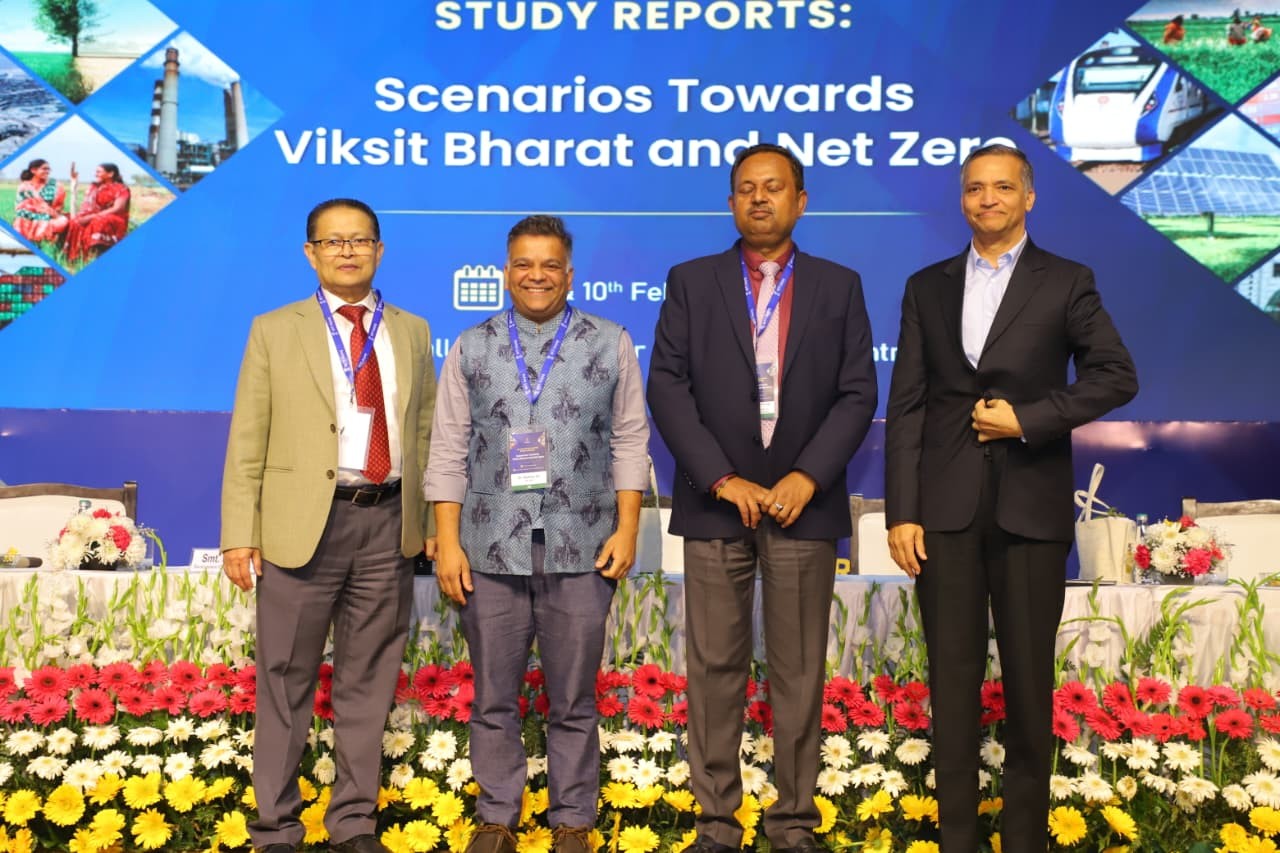
 NITI Aayog has released eleven study reports outlining scenarios to achieve Viksit Bharat by 2047 while progressing towards Net Zero greenhouse gas emissions by 2070. The final set of four reports was unveiled on 10 February 2026 at the Ambedkar International Centre, New Delhi, in the presence of Dr. Ramesh Chand, Member, NITI Aayog; B.V.R. Subrahmanyam, CEO, NITI Aayog; Dr. Mangi Lal Jat, Secretary, Department of Agricultural Research and Education & DG, ICAR; with a virtual address by Dr. V. K. Paul, Member, NITI Aayog.
The reports provide sector-specific strategies and examine the social implications of India’s development and climate transition.
In the buildings sector, around 86% of India’s floor space in 2070 is yet to be constructed. With air-conditioning ownership projected to rise above 80%, the reports emphasize passive design, energy-efficient appliances, and low-carbon building materials to avoid excessive energy demand and mitigate heat stress.
For agriculture, which remains India’s largest employer, the focus is on resource efficiency measures such as micro-irrigation and optimized fertilizer use. These interventions aim to increase farmer incomes, improve soil health, and strengthen climate resilience, while also reducing emissions.
The waste sector report advocates 100% door-to-door collection, segregation, and adoption of waste-to-energy solutions like bio-methanation and Bio-CNG. Effective waste management can convert waste into valuable resources, supporting circular urban economies and reducing reliance on virgin materials.
The social implications report underscores that the Net Zero transition is human-centric, influencing land use, employment, migration patterns, and public health. The shift is expected to deliver reduced air pollution and strengthen climate-ready health systems.
Following the report release, a panel discussion on “Climate Transition and Social Implications Across Sectors” brought together experts from government, research institutes, and development organizations. Panelists highlighted the need for sectoral planning, sustainable building design, resilient agriculture, and just transition policies.
Key insights from the reports include:
-
Viksit Bharat 2047 is achievable across multiple scenarios.
-
Electrification, greening of energy, Mission LiFE, behavior change, and circularity are essential to reach Net Zero.
-
The path to Net Zero supports inclusive, resilient, and sustainable development, balancing growth, climate commitments, and societal well-being.
These reports mark India’s first multi-sectoral, government-led study integrating economic growth, climate targets, and social considerations. They provide a comprehensive roadmap for policymakers, offering actionable strategies to build a developed, climate-resilient India.


Nurturing Creativity – Keekli Charitable Trust, Shimla