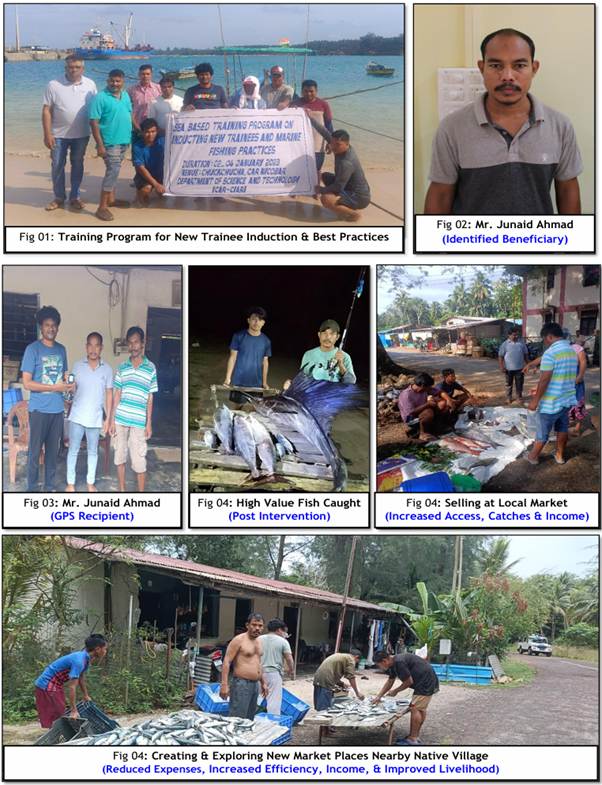
 The introduction of Global Positioning System (GPS) devices for fishermen in Car Nicobar has transformed traditional fishing practices, enabling more precise navigation and efficient targeting of fishing grounds.
This technological intervention has not only improved the availability of fresh fish for local communities—enhancing access to protein and essential nutrients—but has also created new income opportunities. Fishermen such as Junaid from Teetop village and Abdul Sattar from Chuchucha village have started selling their catches in local markets, significantly boosting household earnings.
Fishing in the Nicobarese communities has historically relied on experience and traditional knowledge, often hampered by unpredictable seas, weather disturbances, and limited navigation tools. These challenges sometimes resulted in lost productivity and even endangered lives.
To address these issues, the Central Island Technological Research Institute introduced GPS devices adapted to local marine conditions under the SEED Division programme of the Department of Science and Technology (DST). Fishermen received hands-on training in GPS navigation and modern fishing techniques, supported by surveys to understand local challenges and guidance from the Tribal Council to facilitate adoption.
With GPS, fishermen can now locate productive fishing areas quickly and accurately. A Coastal Fisheries Information Hub has been set up on Car Nicobar, and a total of 10 GPS devices have been provided—five for individual tribal fishermen and five for communal use.
The results have been remarkable: daily fish catch has increased by an average of 168%, while fishing time has decreased thanks to precise navigation. This surge in availability has improved nutritional intake across families and the wider community, while higher incomes have enhanced access to diverse food sources, contributing to better overall health and well-being.
The initiative demonstrates how combining traditional knowledge with modern technology can sustainably uplift local livelihoods and strengthen community nutrition.
Sponsored

Nurturing Creativity – Keekli Charitable Trust, Shimla