
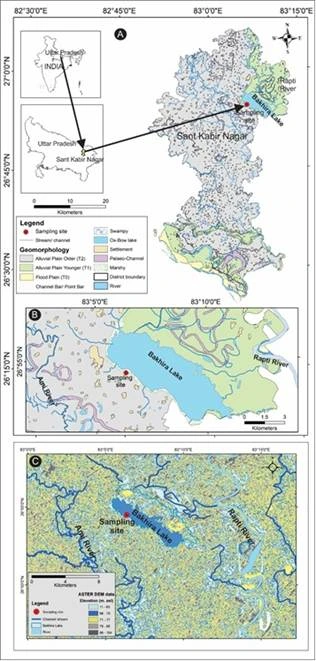
 A ground-breaking study by scientists at the Birbal Sahni Institute of Palaeosciences (BSIP) has analyzed 25,000-year-old sediment deposits beneath Uttar Pradesh’s Bakhira Lake, offering vital insights into northern India’s long-term climate patterns. By evaluating the magnetic minerals, geochemical composition, and clay layers in sediment cores, the research maps how the Indian Summer Monsoon evolved from the Last Glacial Maximum to the present day.
Published in Palaeogeography, Palaeoclimatology, Palaeoecology, the findings bridge a major gap in the palaeoclimate records of the Central Ganga Plain (CGP). By identifying historical climate shifts—such as ancient droughts and periods of heavy rainfall—this high-resolution timeline helps scientists separate natural climate fluctuations from recent human-induced climate change. The data provides a critical baseline to refine future monsoon predictive models, directly supporting regional agriculture, flood and drought mitigation, and sustainable water resource management.
PM Modi to Inaugurate Mega ESTIC 2026 Conclave at Bharat Mandapam
Sponsored

Nurturing Creativity – Keekli Charitable Trust, Shimla