More than 400 young minds, one historic stage, and three unforgettable days of stories, creativity and discovery
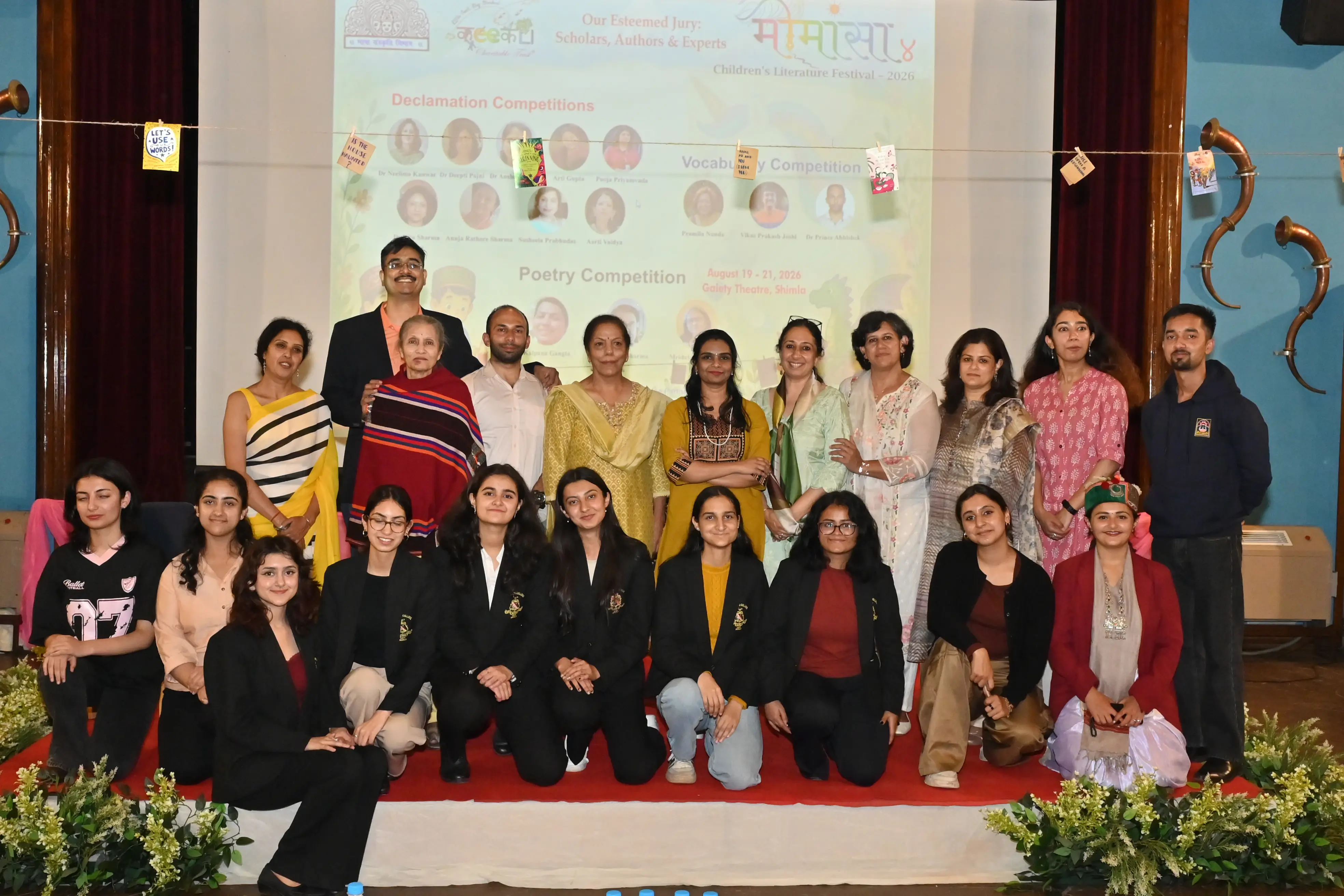
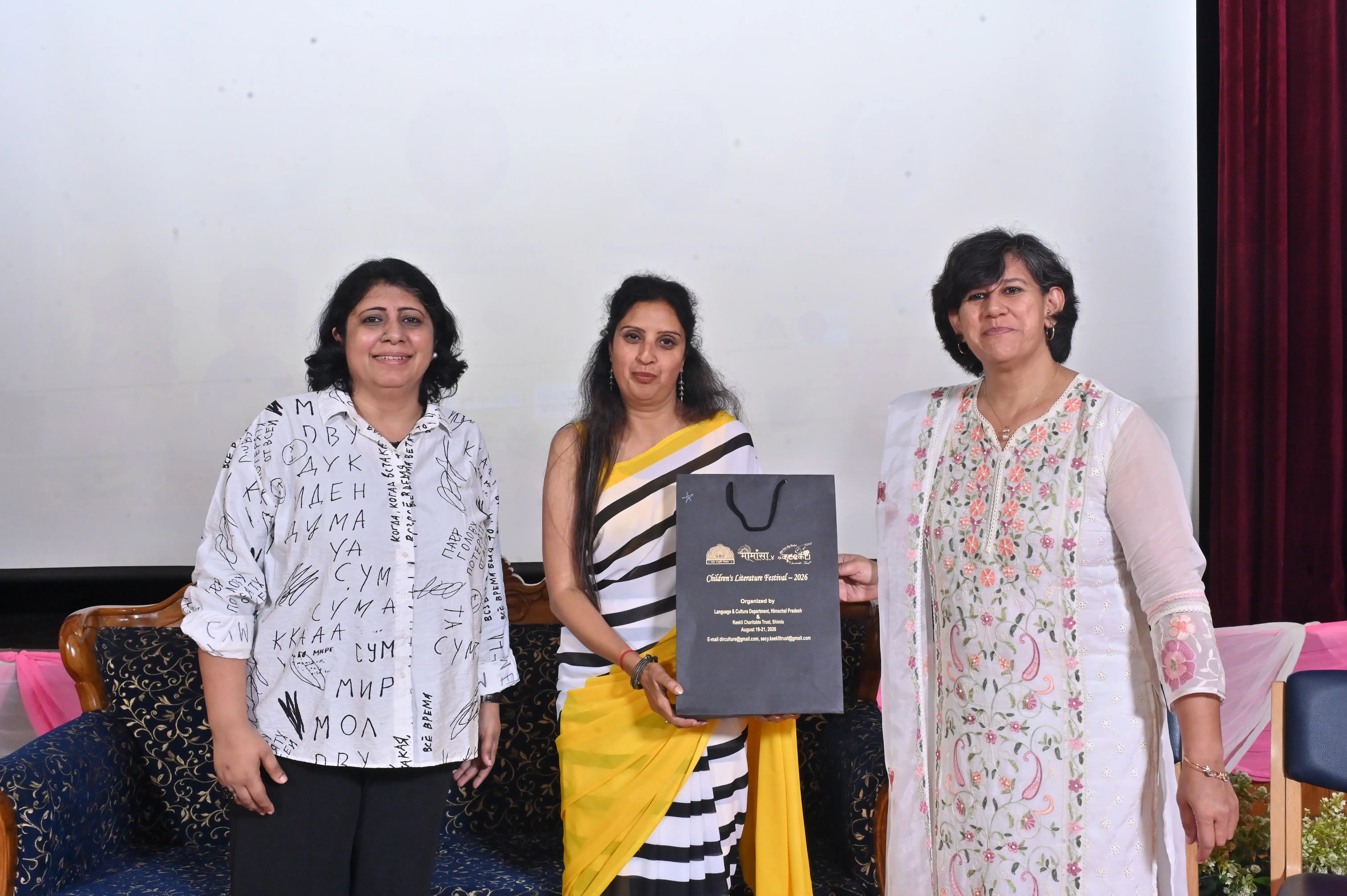
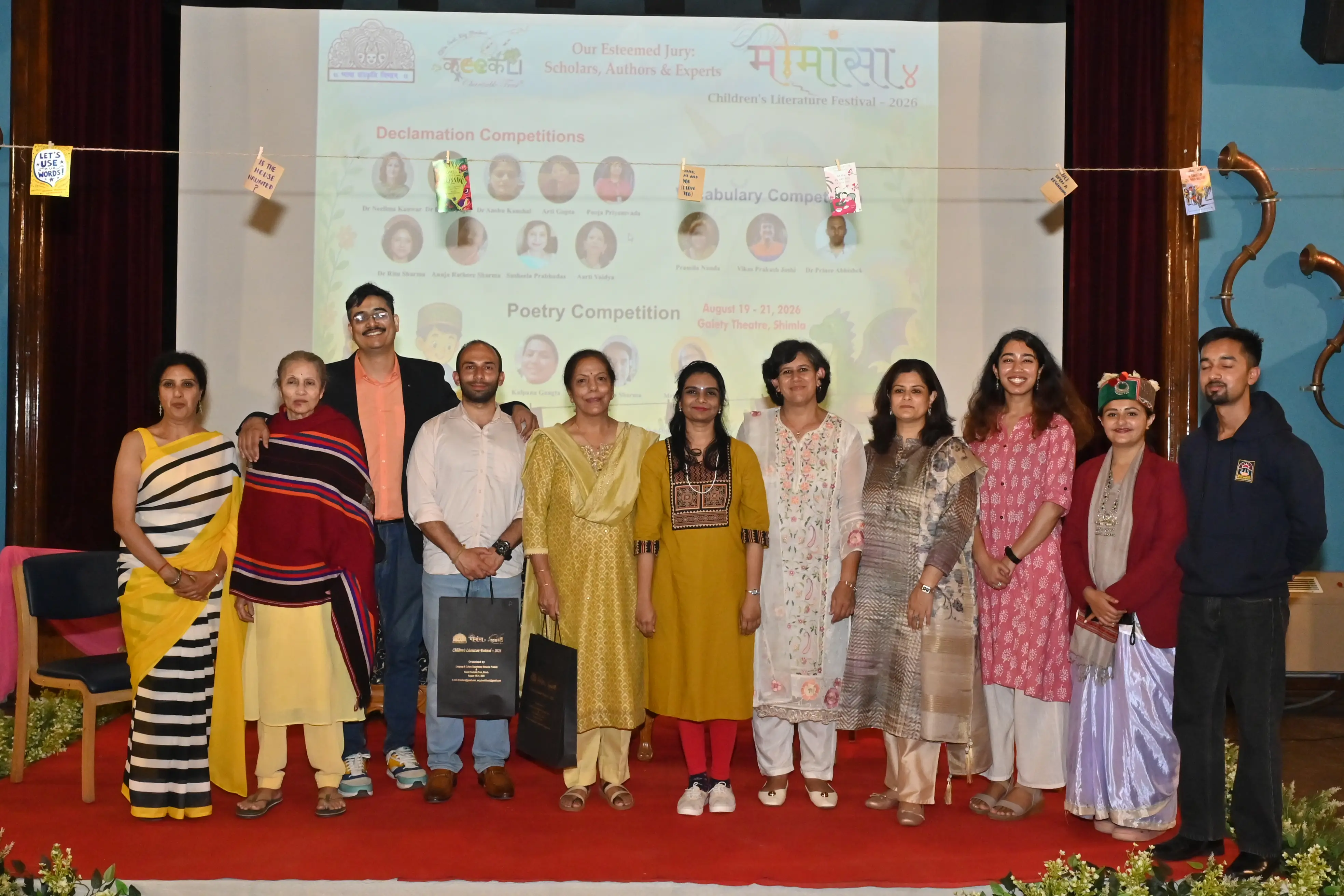
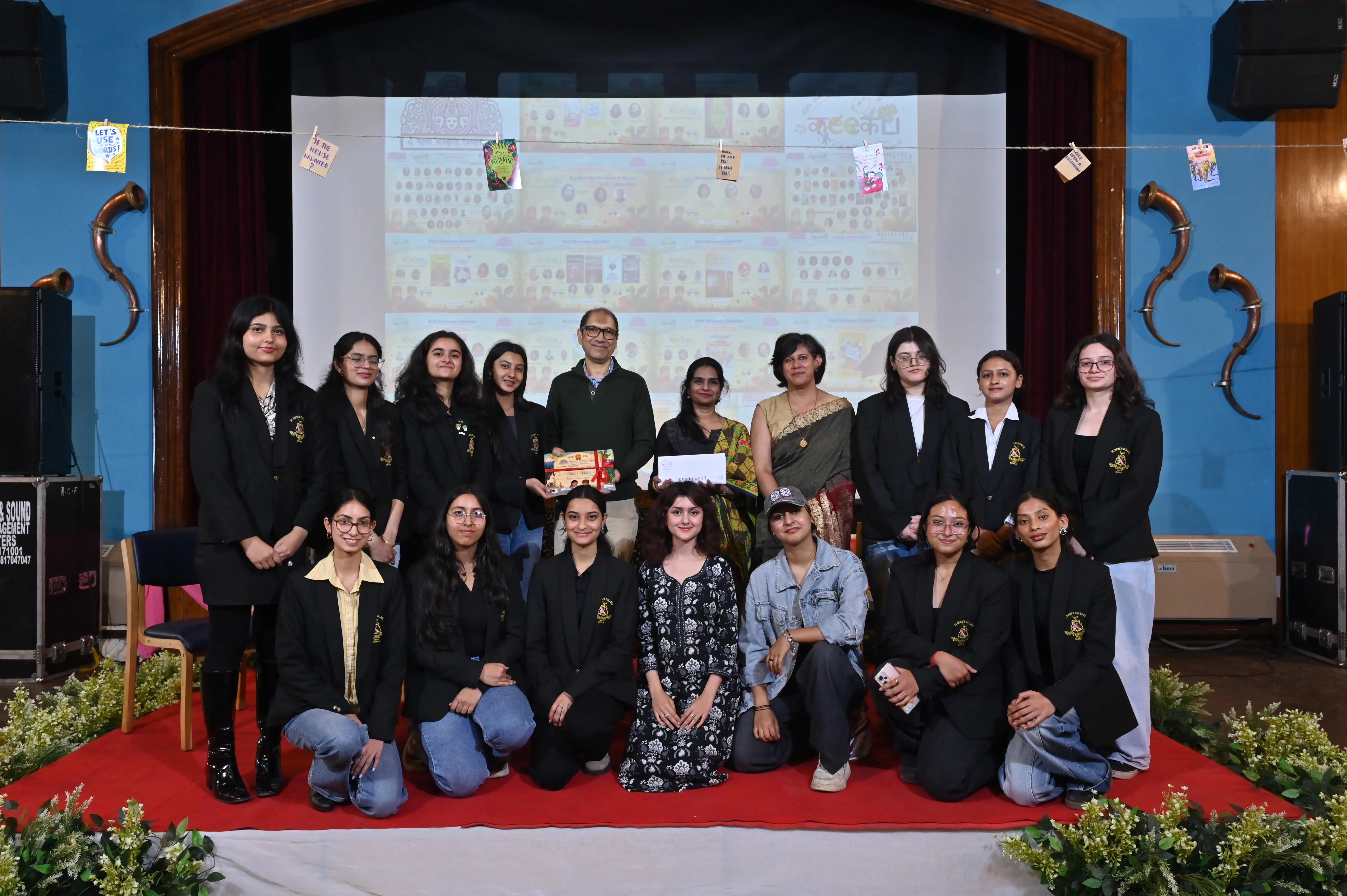
Shimla witnessed a vibrant celebration of books, imagination and young talent as the fourth edition of Mimansa – Children’s Literature Festival 2026 brought together more than 400 students from schools, colleges and universities for three inspiring days of literary conversations, competitions, workshops, storytelling, poetry, art and creative expression. Organised jointly by the Department of Language and Culture, Government of Himachal Pradesh, and Keekli Charitable Trust, Shimla, the festival transformed the historic Gaiety Complex into a lively meeting place where young readers could interact with authors, writers, artists, educators and fellow students. (MIMANSA 2026 AWARDS)




The festival, held from August 19 to 21, opened with an atmosphere of excitement and anticipation. The formal inauguration featured noted author and National Award-winning voice artist Shobha Tharoor Srinivasan, whose presence set the tone for a celebration centred on language, literature and the power of young voices. The closing ceremony was graced by author, editor and storyteller Nalini Ramachandran as Chief Guest, while renowned cartoonist and illustrator Ajit Narayan joined the festival as Guest of Honour. Their participation added to the festival’s diverse mix of literature, visual storytelling, folklore, poetry and creative learning.
What made Mimansa 2026 particularly special was the breadth of participation. Young people from Swaran Public High School, Doon Valley Public School, St. Thomas School, Saraswati Shiksha Mandir High School Shanan, Monal Public Senior Secondary School, Auckland House School for Boys, Auckland House School, Sambhota Tibetan School, Delhi Public School Shimla, Saraswati Paradise International Public School, Dayanand Public School, Monal Public School, ECI Chalet Day School, Sacred Heart Convent, St. Edward’s School, Loreto Convent Tara Hall, SVGC Ghumarwin, Chapslee School, GSSS Majhar and Aryan Public School Sunni, among several others, participated in the festival’s activities.


The festival also extended its literary conversation to higher-education institutions, with enthusiastic participation from Government Sanskrit College, Sundarnagar, Sanjauli College, Rajkiya Kanya Mahavidyalaya, Himachal Pradesh University, Kotshara College and St. Bede’s College. This mix of school and college students gave Mimansa an intergenerational character, allowing younger readers, emerging writers and senior students to share the same creative space.
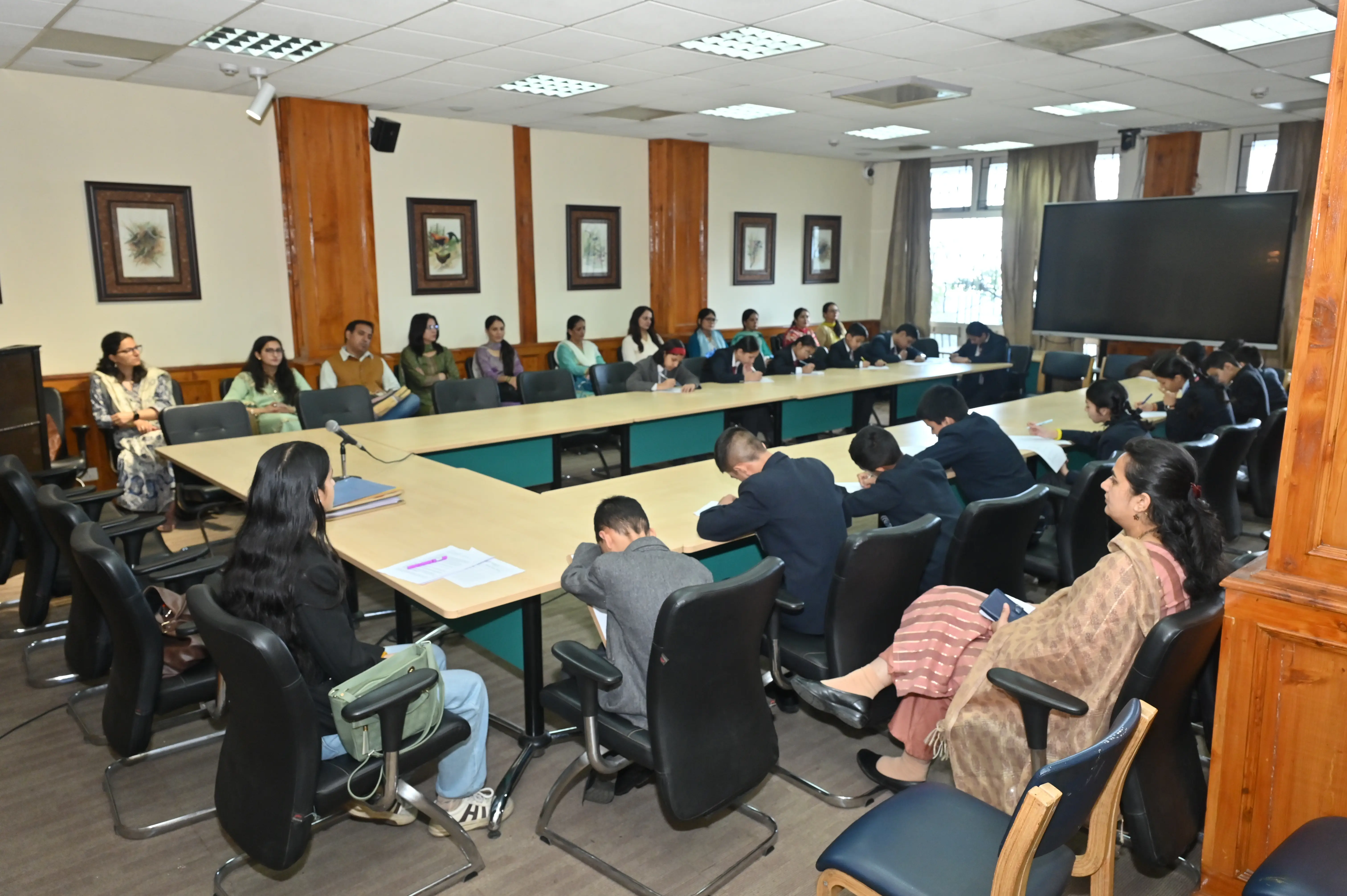
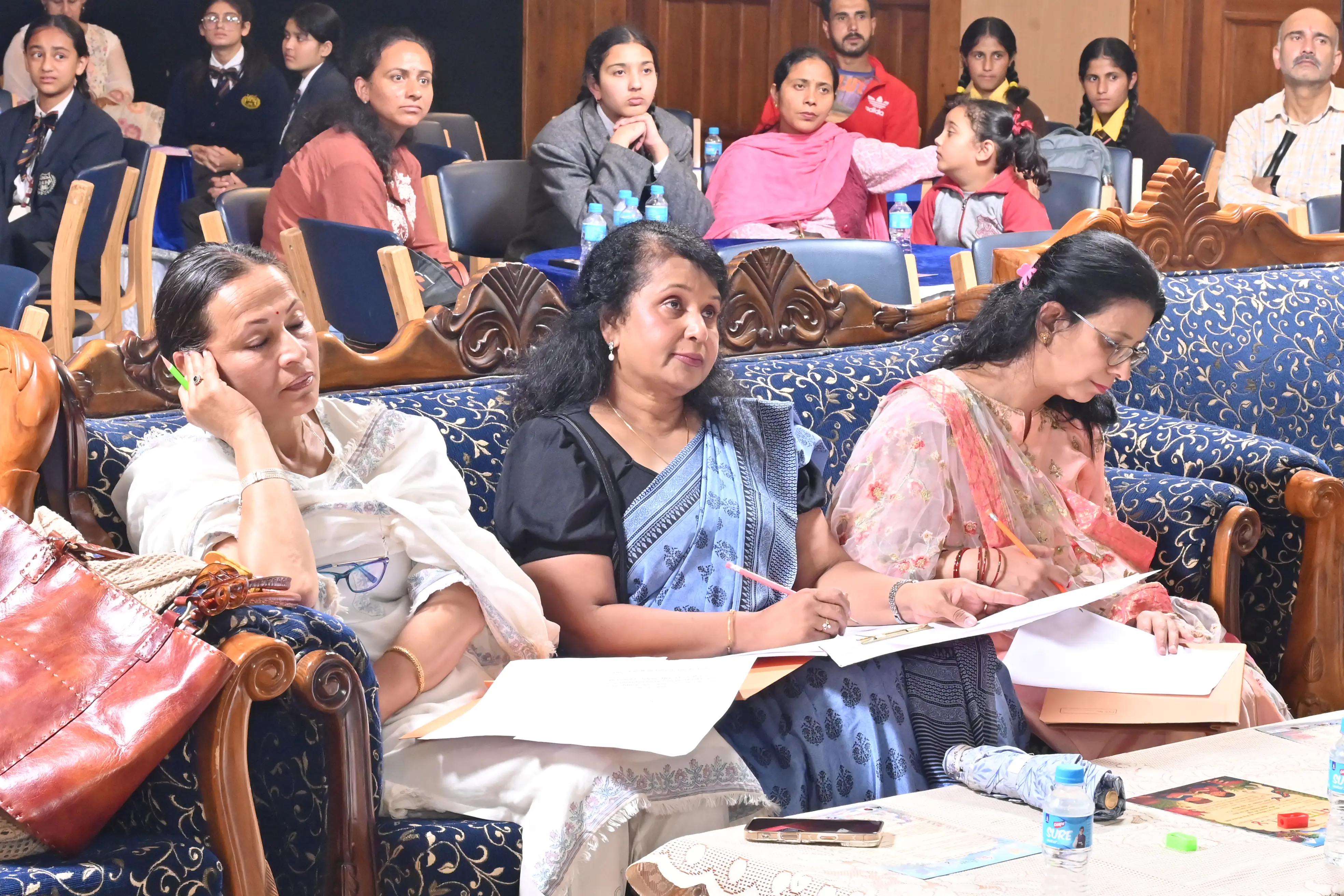
From the very first day, the Gaiety Complex was filled with young voices. The Inter-School Declamation Competition for Classes 5 to 7 gave students an opportunity to speak on subjects connected with education, technology, books, values and the future. Judged by Pooja Priyamvada, Aarti Gupta and Dr Ritu Sharma, the competition emphasised confidence, diction, clarity and effective communication.
Literature remained at the heart of the festival. A book conversation around Ranjodh Singh’s Maili Kameez, moderated by Dr Ashoo Khosla, brought the author together with young readers Sujal Sharma, Aahana and Shagun Ranote. The interactive format encouraged children to move beyond simply reading a book and instead question its author, explore its themes and share their own interpretations.
Another memorable session featured Minakshi Chaudhry and Dr Meenakshi Faith Paul, alongside young co-authors Shagun Ranote and Midori Das, discussing Is The House Haunted? and The Humility of Lies. The books, created under Keekli’s Angels, highlighted the festival’s commitment to nurturing young writers and giving children the confidence to see themselves not only as readers but also as authors.
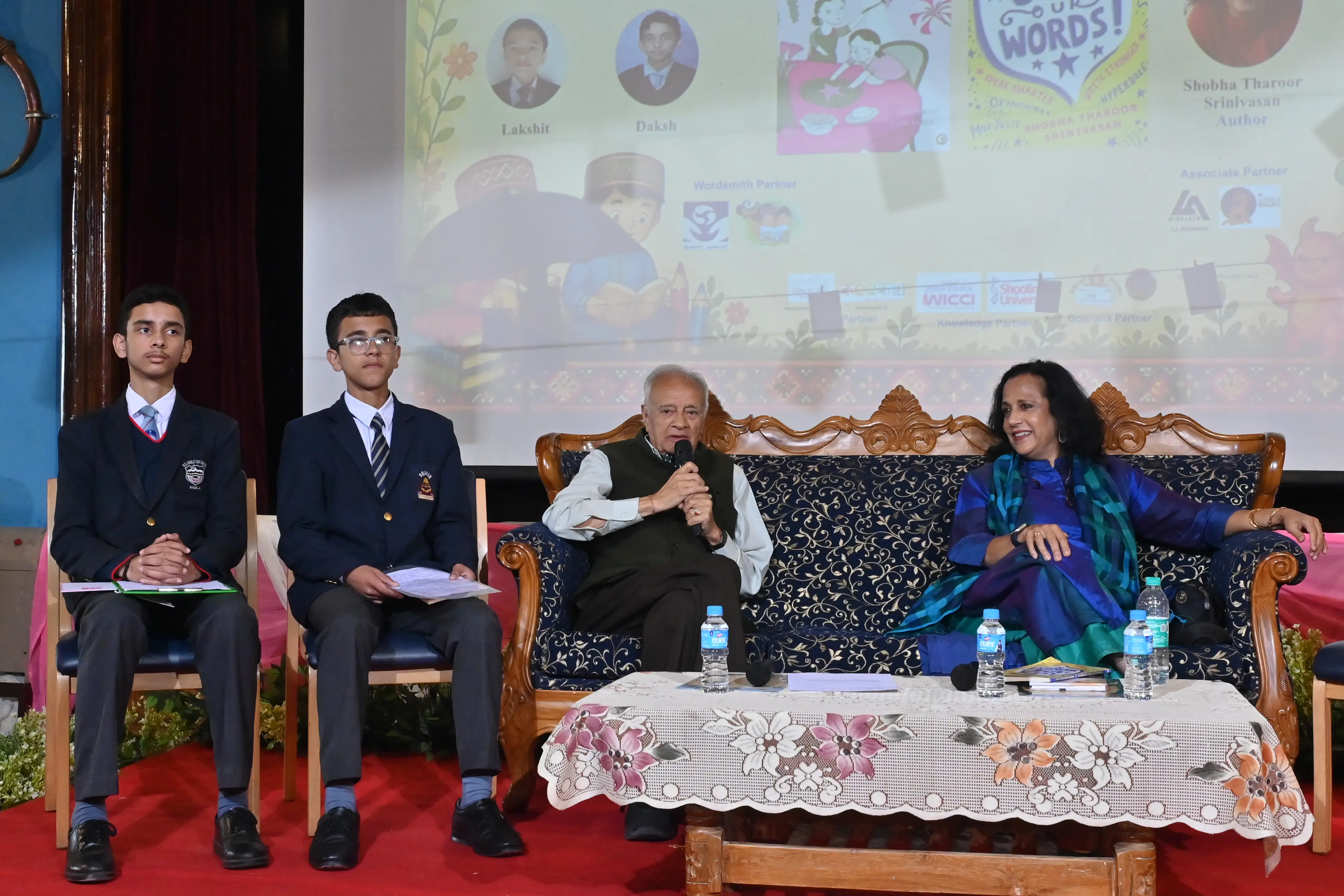
The presence of Shobha Tharoor Srinivasan created another special literary moment. In a session moderated by veteran columnist and theatre personality Srinivas Joshi, young readers Lakshit and Daksh interacted with her around Let’s Use Our Words and Haiku, Me and You (I Love You). Through poetry, language and rhythm, the session opened up new ways for children to experience the beauty and playfulness of words.








For senior students, filmmaker and President’s National Film Award-winning creative professional Vivek Mohan conducted the Books to Script Workshop, teaching participants how a written story can be transformed into a visual screenplay. The workshop later culminated in a final competition, where students presented their interpretations and demonstrated their understanding of narrative, character and visual storytelling.
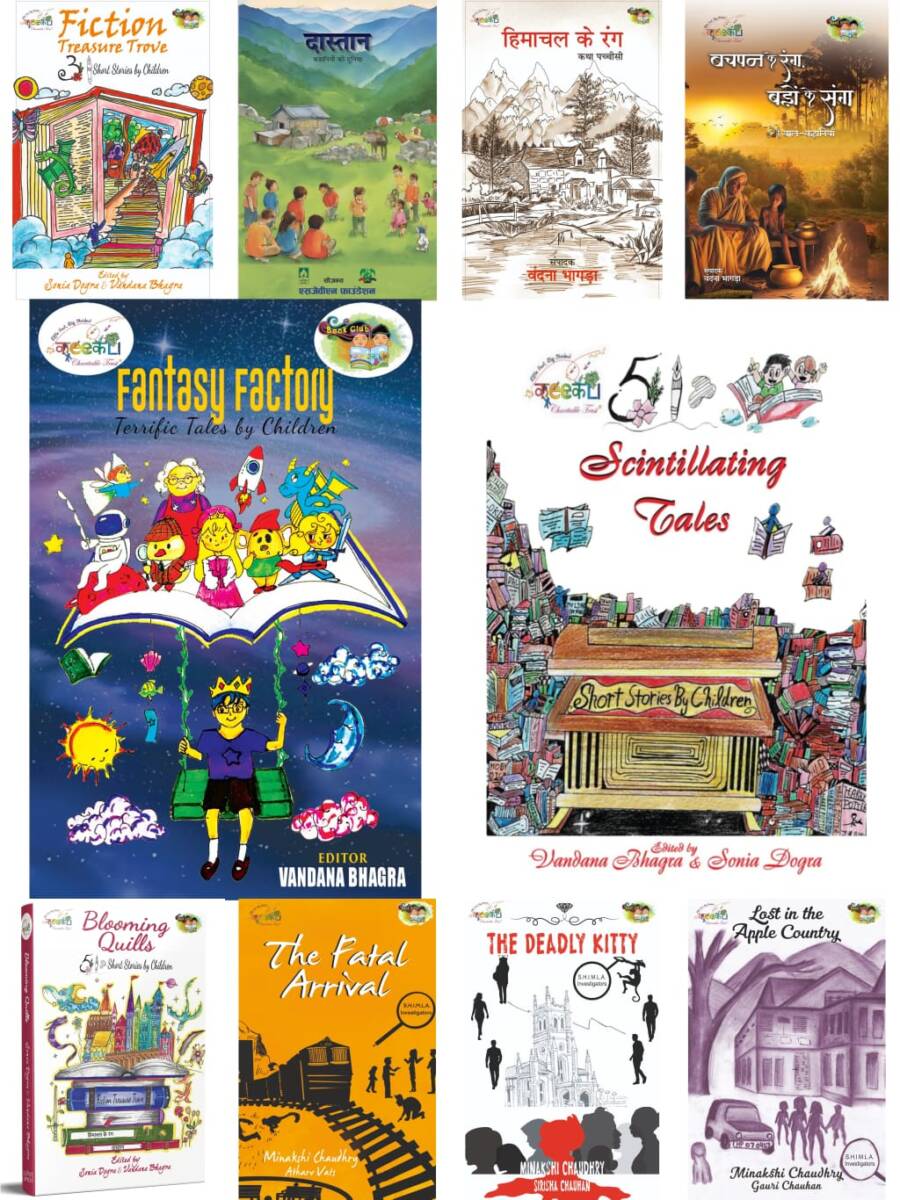
The literary energy continued with a session on Fantasy Factory, an anthology published by Keekli Charitable Trust. Dr Usha Bande, along with young writers Ashmita and Anvesha and emerging authors Kyna Taneja, Sejal Kimta and Sneha Harnot, became part of a conversation celebrating the imagination and potential of young writers.
Art occupied an equally important place in the Mimansa experience. Renowned cartoonist and illustrator Ajit Narayan conducted the engaging “Fun With Art: Cartoons in Books” session, joined by young artist Sakshi of Rajkiya Kanya Mahavidyalaya, Shimla. Children explored how simple lines, expressions and visual ideas can develop into characters and stories. The creative experience continued through the Inter-School and College Art Competition, judged by Dr Anjana Bhardwaj and Dr Bhader Singh.
Poetry also found a powerful platform. A workshop led by Dr Meenakshi Faith Paul and Hindi poet Atma Ranjan encouraged participants to explore emotion, imagination and personal expression. Young poets read and discussed their work, discovering that poetry can be both a literary form and a deeply personal way of understanding the world.
Day 2 expanded the festival’s creative canvas. The Vocabulary Competition for Classes 6 to 8 tested students on synonyms, antonyms, proverbs and language skills in Hindi and English. Conducted through written and oral rounds, the competition was judged by Mrs Pramila Nanda, Dr Abhishek Prince Rohta and Vikas Prakash Joshi.
A book discussion on Almost Adulting by Probal J. Bhattacharyya, moderated by Dr Anita Sharma, brought together young readers Dakshita Arora of St. Thomas’ School, Sneha of Monal Public School, North Oak, and Pravesh Sharma of Sanjauli College. The discussion explored growing up, memories and the experiences that shape young lives.
The Storytelling and Writing Workshop led by Pooja Priyamvada, with Ritanjali Hastir as moderator, encouraged Classes 5 to 8 students to turn everyday observations into stories. Participants explored characters, settings and ideas while learning to trust their own imagination.
Author Vikas Prakash Joshi then interacted with young readers Harsh Thakur of Swaran Public School, Falaq of Monal Senior Secondary School and Ekaansh Kumar around My Name is Cinnamon. The session demonstrated the festival’s distinctive approach: children were not passive members of an audience but active participants in literary conversations.
One of the most distinctive experiences was the Heritage Walk with Sumit Raj, which took students beyond the festival venue and into the historic spaces around Shimla’s Ridge and Gaiety Complex. Through stories about architecture, people and the city’s past, participants discovered that heritage too can become a source of storytelling.
Hindi literature received its own spotlight through the session on Bal Kavyadhara by Om Prakash Sharma, moderated by Dinesh Sharma, Assistant Professor of Sociology at Centre of Excellence Government College, Sanjauli. Young readers Muskaan, Aryan and Yug Kanwar joined the discussion, bringing youthful perspectives to children’s poetry.
The second day also featured another Art Workshop: Cartoons in Books with Ajit Narayan, while the Middle and Senior Category Declamation Competitions challenged students to address contemporary issues such as screen addiction, artificial intelligence, reading versus scrolling, social media, freedom of speech, validation culture and the changing reading habit. The jury included educators and academics such as Dr Neelima Kanwar, Dr Deepti Pajni, Dr Anshu Kaushal, Dr Neena Arora Jain and Dr Abhishek Prince Rohta.
The Books to Script Final Competition became another highlight, as students of Classes 8 to 12 presented their creative adaptations following Vivek Mohan’s workshop. Their work demonstrated how young people can interpret literature through a cinematic and visual lens.
The final day brought a joyful conclusion to the three-day celebration. The Poetry Competition for Classes 2 to 5 transformed the stage into a colourful space of expression, with young participants presenting poems through voice modulation, actions and confidence. The jury comprised Kalpana Gangta, Mridula Srivastava and Sitaram Sharma.
A Storytelling Workshop with Prof. Atul Khosla, moderated by Ritanjali Hastir, encouraged children to observe the world around them and discover stories in ordinary experiences. The sessions underlined one of Mimansa’s strongest messages: every child has stories to tell when given the opportunity and confidence to express them.
The final day also featured a conversation around The Sinister Holiday by Anirban Bhattacharyya, with Sumit Raj as moderator and young readers Mokshika, Shaurya Sharma and Kritika. As Anirban was unable to attend, his father, author Probal J. Bhattacharyya, represented him, creating an unusual and warm father-son literary connection.
Another engaging session featured author Lokesh Thakur, moderator Jasleen Gulati and young college readers Sneha Harnot, Isha Thakur and Tarun Sharma, discussing CoMaTose and its contemporary themes.
The festival’s concluding literary conversation featured Chief Guest Nalini Ramachandran in an interview with young reader Pritha Doegar around Once Upon A Beginning: Incredible Origin Stories From India. Their conversation travelled through mythology, folklore, tribal traditions, regional narratives, nature and cultural memory, bringing the festival back to one of its central ideas—the enduring power of stories to connect generations.
The festival concluded with an Awards Ceremony, recognising students who participated in declamation, poetry, art, vocabulary, storytelling and Books to Script activities. Yet the true achievement of Mimansa 2026 went beyond trophies and certificates. It lay in the confidence with which children stepped onto the stage, questioned authors, shared poems, created artwork, explored heritage and discovered the joy of transforming ideas into stories.
With 400-plus young participants, a wide network of schools and colleges, and an impressive line-up of authors, artists, educators and creative professionals, Mimansa 2026 reaffirmed Shimla’s growing place on the children’s literary map. The festival demonstrated that literature need not remain confined to textbooks or classrooms. In the right environment, books can become conversations, stories can become scripts, poems can become performances, drawings can become characters, and young readers can become writers, artists and storytellers.
As the curtains came down at the Gaiety Complex, Mimansa 2026 left behind more than memories of competitions and awards. It left hundreds of young participants carrying new stories, new questions and new possibilities home with them. The fourth edition once again proved that when children are given a platform to read, question, imagine, create and speak, their voices can become the most powerful story of all.
Mimansa 2026 was, ultimately, a celebration not merely of children’s literature, but of childhood imagination itself—a three-day reminder that every young mind holds a story waiting to be heard.

#Mimansa2026 #ChildrensLiteratureFestival #KeekliCharitableTrust #DepartmentOfLanguageAndCulture #HimachalPradesh #Shimla #YoungReaders #YoungWriters #BooksAndStories #LiteratureFestival #ChildrensLiterature #CreativeWriting #Storytelling #Poetry #ArtAndLiterature #YoungVoices #SchoolStudents #LiteraryFestival #GaietyComplex #ShimlaEvents #ReadingCulture #FutureWriters #CreativeExpression #HimachalCulture #BooksToScript
Sponsored
Nurturing Creativity – Keekli Charitable Trust, Shimla